New Pill? Viagra for Women!

A hand holding a small pink pill
(This post was originally published on June 8, 2015.  As of April 19, 2018, it was updated to include new information)

In 2015, the FDA advisory committee was pushing for the approval of a new drug, Addyi (aka flibanserin), which is being hailed as “viagra for women.”  The drug was approved on August 18, 2015. Many women suffer from a low sex drive for many different reasons.  I myself had suffered with it since my Lupron Depot injections, which were immediately followed by a continuous birth control.  My libido was nearly non-existent for almost two years.  Since I stopped taking birth control pills, however, it returned full-force!

But what is this drug? What are the potential side effects? How long were the clinical trials?  All of these questions come running to the tip of my tongue – will the pros outweigh the cons?  Will there be interactions with my birth control pill?  Less questions, MORE RESEARCH!

Continue reading

Endometriosis & Soy Products

Bowl of soy beans in the pod

Here we go again, inspired to write due to a dietary “restriction.”  I’ve read that as an Endo Sufferer, I should avoid (or drastically cut back from) soy and soy-based products.  I’ve read soy mimics and increases estrogen levels, which we’ve come to understand can affect our Endometriosis growth and symptoms.  So today, I want to do my own research.

Soy products are the “richest sources of isoflavones” that humans can eat.  What the heck is an isoflavone? It’s a “plant-based compound with estrogenic activity” English, Lisa, ENGLISH! It means it’s a plant-based compound that mimics estrogen.  So, soy has a very rich, or high levels, of a property, a compound, a thing…that acts like, or mimics, estrogen.  The isoflavones can attach themselves to estrogen receptors throughout the body, and either mimic or block certain estrogen effects in tissues.

Why is that bad? Well, it’s not, for everyone.  Estrogen may help prevent certain forms of cancer (breast, uterine, or prostrate), stimulate bone growth, or help women suffering with post-menopausal symptoms. But for those of us who suffer from what very-well may be an estrogen-driven disease, it can be very bad.

Continue reading

Ditch the Caffeine (if you can…)

Coffee beans, green tea, chocolate powder

Before I altered my diet to be more Endo-friendly, I was drinking 3-5 cups of coffee per day.  Toss in a Coke, Barq’s Root Beer, or Dr. Pepper for lunch.  And maybe another during dinner.  After my diagnosis, I read that caffeine is bad for my Endo…but why?  I kicked it right away. Cold turkey (only had withdrawal headaches for one week…).  Haven’t looked back since.

Caffeine is found naturally in coffee beans, tea leaves, and the cacao bean.  Coffee.  Tea.  Chocolate.  All of the deliciousness!

Caffeine May Increases Chances of Endometriosis

Scientists do not know why caffeine effects the possibility of developing Endometriosis; however, studies have shown that it does.  Many believe that caffeine intake increases estrogen levels, which may increase the chance of developing Endometriosis, or worsening our symptoms.

Continue reading

Reader’s Choice : Hysterectomies & Myomectomies Spreading Cancer?

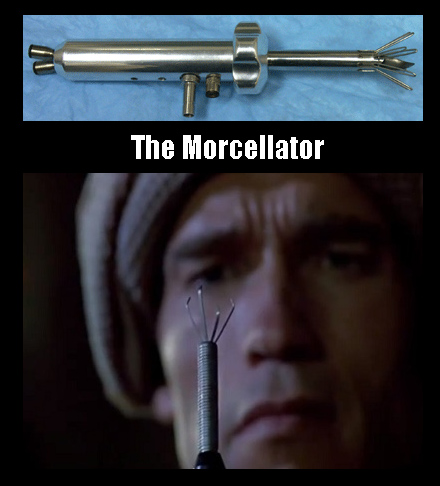
A morcellator

I have heard that sometimes when physicians conduct a hysterectomy where the uterus was shredded/broken down and removed through small incisions then biopsied, cancerous cells could be detected during the biopsy.  And that the presence of those cancerous cells may remain in the abdominal cavity post-procedure, which may spread and continue to develop.  Some women who this happened to ended up having to go through a intense radiation therapy treatment to remove the cancerous cells.

Continue reading