Share Your Story : Amy

A woman at a music concert

Amy was 29 years old when she learned she had Endometriosis.  Now 38 and living in New Jersey, she has turned her personal battle with Endometriosis into a campaign to help others.

Amy’s Journey: My first memory of my cramps was when I was just 14 years old. I was on vacation with my family in Florida at my Grandmother’s house. We were there for a fun family vacation. However, my cramps were so bad that my mother insisted that I do a shot of brandy to warm my insides up. I was only 14! That is how my period started and it has continued to affect my life on a constant basis.

Continue reading

Is there a link between Endometriosis and Endometrial Hyperplasia?

Bloomin' Uterus logo surrounded by question marks

One of my readers recently contacted me asking if I could do some research for her.  Her physicians suspect she may have hyperplasia.  What is that, you may ask?  It’s the changing or enlarging of cells or organs which may develop into cancer.  Specifically, she is undergoing tests to see if she has endometrial hyperplasia.  Now what’s that?  It’s when the uterine lining (the endometrium) is too thick.  Her question?  Is there a link between Endo and hyperplasia?

I found this to be very interesting as I had an MRI before my diagnostic surgery which found I had abnormally thick uterine lining.  The first part of my surgery last year was to go in and perform a D&C (dilation & curettage) to remove some of the thick lining.  So now I’m not only researching for my reader, but for myself (although my D&C biopsy came back normal).

Continue reading

Endometriosis & The Heart

Diagram of human heart

I’ve read bits and pieces here and there that Endometriosis can grow on your heart (or the lining of your heart).  And have heard from a friend that she may have it on her heart.  That’s scary business!

Which got my juices flowin’ to find the documented cases of Endometriosis on the heart, how it was excised (if at all), etc.  Here goes ( PS – there’s not a lot out there…)!

Endometriosis is usually found within the pelvic cavity, but has also been known to travel northward and latching onto the liver and diaphragm.  It has also been found on the membranes surrounding the lungs.  Even rarer, it has been found on the brain, in the lymph nodes, and on the eyes.  But today, we focus on the heart…which is also SO INCREDIBLY RARE. Please, I’ll preface it by saying this is so super duper rare.

Continue reading

Reader’s Choice : Letrozole & Endometriosis

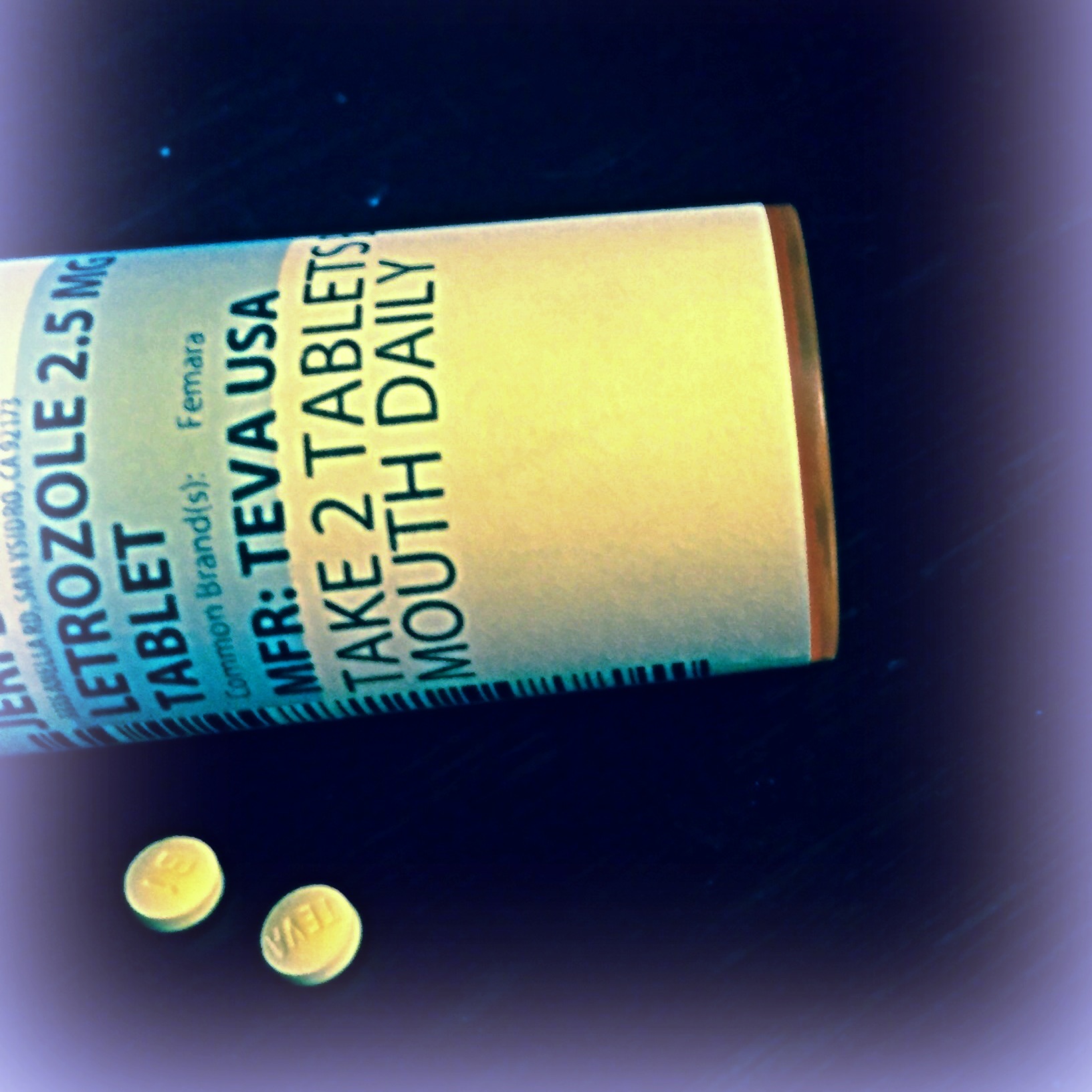
Bottle of Letrozole
Photo courtesy of JLD

One of my local EndoWarriors has started a new medication to help with her Endometriosis pain and symptoms, based upon the recommendation of her new physician.  It’s Letrozole, which I had never heard of.  And she asked me if I had any info on it…so…now I’m inspired to do some research!

What is Letrozole?

Letrozole is the generic name for Femara, a drug classified as an aromatase inhibitor.  What is aromatase?  It’s an enzyme that is crucial in the creation of estrogen. Aromatase inhibitors have been FDA approved for treating breast cancer in post-menopausal patients.  However, it has piqued the interest of the medical community in controlling Endometriosis symptoms.  It is not yet FDA approved for this treatment, but is used as an off-label, accepted treatment among the medical community. As of today’s research, there are no indications that drug manufacturers are going to seek FDA approval for aromatase inhibitors to treat Endometriosis.

Continue reading

Endo, Medications & Sunburns

Illustration of sunshine

So, like a lot of other people with Endometriosis I’ve done a few things : 1) Lupron Depot injections, 2) NSAIDs, and 3) birth control pills.  Each of these medications, and any type of hormone treatments, can make a person susceptible to sunburns or sun sensitivity.  This past weekend I was out and burnt the tops of my hands, and man did it happen quick and did it itch!!  Ugh.  Which got me curious: why does it make me more sensitive?  I remember reading in my Lupron and birth control packets about the sun sensitivity warning.  But what’s going on with my body? Time for research!

Continue reading

Endometriosis : An Economic Machine

meme with Fry from Futurama holding up money. Text reads Shut up and take my money!

There are (at best guess) 176 million people born with a uterus worldwide who suffer from Endometriosis.  And it’s estimated that 5 million in the United States have Endometriosis.  1 in 10 supposedly have, or will have, this disease.  One. In. Ten.

An incurable, recurring disease which causes pain and infertility, among many other symptoms.  A revolving door disease which the “Golden Standard” of treatment is either constant prescription medications, or surgery, or both.  And, once removed, it will more than likely grow back and cause the same pain and symptoms, sometimes much worse than before.  And the only tried and true way to diagnosis the disease with with surgery!

So one thing hit me today.  This disease is a driving economic force!  What costs are associated with Endometriosis? As I live in the USA, my curiosity was toward the United States prices.  If you live elsewhere and are curious, I encourage you to figure this out.  For all of you living in the States, let’s find out together!

Continue reading

Shoulders for Sisters : Suicide Prevention

Shoulder for Sisters logo

Suicide and Endometriosis has been a topic heavy on my heart for the past seven months.  Am I suicidal? No.  However, last year there were several EndoWarriors who committed suicide.  And this year a few more have.  Too many.  But can easily understand their hopelessness: pain; no cure; the potential for multiple surgeries; regrowth; Western medicine, alternative medicine, natural supplements, snake oils, relief, recurrence, and the cycle starts all over again.  Not to mention a sense of being completely alone, misunderstood, misdiagnosed, mistreated by physicians, mislabeled as drug-seekers, fakers, and crazies.

I’ve been trying to think of ways that I can help. In a small way.  Or a big way.  And I’ve fallen short on ideas… But today I’ve learned of a group where Warriors with suicidal thoughts can go for help.  An old-fashioned phone-line group.  Yes, that’s right.  You can email, PM, or call someone if you need to talk.  Talk with someone who is in your shoes.  Who knows what you’re going through…because they’re going through it, too.  Understand that you are not alone, and understand that people want to listen. And help.

Continue reading

Reader’s Choice : Can Men Get Endometriosis?

Male symbol

Last night, my boyfriend and I were talking about Endo’s “weirdness” how it can pop up in strange and unheard of places, and he popped the question (no, not THE question…), “Are there any reports of men having Endometriosis?”  I remembered reading somewhere that there were a few rare cases of it, but hadn’t read them deeply enough to understand their situations, diagnoses, and prognoses.  So, we have our topic for today!!

In rare cases, cis-men develop Endometriosis.  Transmen also suffer from the disease. But we will focus on cis-men for this blog: it appears many have been treated with long-term or large doses of estrogen therapy, but some are healthy men who have no history of cancer or estrogen treatment.  Here’s what I could find:

Continue reading

Endometriosis on your skin

Diagram of human skin

It’s about time I research more about Endometriosis being found in places other than your pelvic region.  We’ve already covered lungs, spine, and eyes, and today we’re going to delve into cases of Endometriosis and skin.  Skin? Yes, skin.  I’ve read that it’s rare, just like the other areas outside of the pelvic cavity…but, it does occur.  Some theorize it is implanted via the lymphatic orpro vascular systems; others think the cells are transplanted via surgery.

There seem to be two common categories of Endometriosis and the skin : spontaneous Endometriosis and scar Endometriosis.  Spontaneous Endo simply appears in random places on healthy skin (cutaneous or subcutaneous).  Scar Endo is found within scar tissue from prior surgeries or injuries.  It appears that surgical excision/removal of the Endometriosis lesions from the skin is the most common and effective way of handling the lesions.  Some surgeries may leave defects, which may (or may not) be repaired or rebuilt with a surgical mesh.  Some studies suggest that hormonal treatment may be too harsh for the patient for solitary lesions.

Continue reading