Inflammation & Endo

Inflamed Bloomin' Uterus logo. It looks bloated and swollen

The Oxford Dictionary defines inflammation as, “a localized physical condition in which part of the body becomes reddened, swollen, hot, and often painful, especially as a reaction to injury and infection.”

An article which is slated to be published in June 2016’s Frontiers in Bioscience reviews previous studies and literature which discuss how inflammation may cause Endometriosis to develop.  It states, “…inflammation is crucial in the pathogenesis of endometriosis…” Pathogenesis is the development of a disease; the cellular events and mechanisms that lead to a disease.

Continue reading
Reader’s Choice : Endometriosis & Bipolar Disorder

Drama masks

I was contacted by one of our readers who shall remain anonymous.  She suffers from Polycystic Ovary Syndrome (PCOS) and Bipolar Disorder.  Her OBGYN suspects she has Endometriosis; however, she had to return to college out-of-state and wasn’t able to have her diagnostic surgery.  In the meantime, her physician is encouraging her to remain on birth control pills to suppress the possible Endo symptoms.  Her symptoms are worsening…

She had heard that there may be a link between Endometriosis and Bipolar Disorder, and that it may be difficult to treat both at the same time due to complications with the medications interacting with each other, or even cancelling the medicinal effects of the pills.

Continue reading

Endometriosis & The Bowel

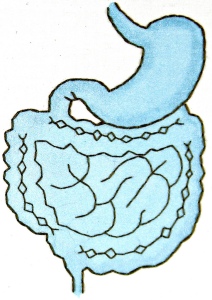
Diagram of human bowels

As you may know, Endometriosis is not limited to just your reproductive bits & pieces.  It can implant, grow, and fester in many places; the bowel included.  But what does that mean? How do you know if it’s on your bowel?  Today’s blog will go into that…Read on, dear Reader…read on.  Word of warning : I will be using words like fart and poop! Why dance around the subject with flowery words when I feel like I’m a giggly 12-year-old girl?

It is estimated that between 5-15% (and some even doctors guess it’s actually between 3-34%) of women with Endometriosis suffer from Endo on their bowels.  Bowel Endometriosis may affect the colon, the rectum, the large intestine, the small intestine, the colon, or the sigmoid colon.  The implants may be physically located on the bowels, or even just located adjacent to them in areas like the Pouch of Douglas, uterosacral ligaments, or rectovaginal septum. The close proximity of the inflamed and irritated lesions may be enough to induce bowel Endometriosis symptoms.  And these symptoms may also be caused by adhesions pulling or twisting the bowels.

Continue reading

Silent Endometriosis

Woman holding her index finger to her lips to shhh someone

There are many usual signs and symptoms of Endometriosis.  If you suffer from this disease, you know them all too well. One of our readers, Tanya, let us know that she suffers from “Silent Endometriosis.”  What’s that?  She has an official Endometriosis diagnosis, but only some of the symptoms associated with Endometriosis.  Some people with Silent Endo don’t have any Endo symptoms (this is known as asymptomatic Endometriosis). Does that make her any less of an Endo sufferer? No, not at all.  She suffers from the same invasive disease as the rest of us.  Just in a different way.

A whole slew of questions were raised, which we’ll look into:

  1. Why do some people present with classic symptoms like crippling pain and some don’t?
  2. And, given that silent endometriosis exists, this makes me wonder if the overall incidents of endometriosis is higher than is usually quoted. How many have this disease and have no idea?
  3. Since the symptoms don’t present as normal in silent endometriosis, what are some of the other signs that people possibly facing this condition can look out for?
  4. Why do some patients who are riddled with endometriosis have no pain, and others with very little endometriosis have excruciating pain?
Continue reading

Frozen Embryo Transfers & Endometriosis

Frozen embryo transfer medical tubes

A lot of people have trouble becoming pregnant, whether or not they have Endometriosis.  The question has been raised : if you have Endometriosis and are undergoing frozen embryo transfer (FET), which treatment regimens and protocols have the highest successful pregnancy rate?

I myself have never considered IVF and had to do a bit of initial research on the differences between fresh and frozen embryos, IVF, etc.  I am so grateful an EndoWarrior asked this question; brought this struggle to my attention.  So if you already know about these, please bear with me as I learn.  Otherwise, skip passed these first few categories to the knitty gritty below 🙂

Continue reading

Bladder & Endometriosis

Diagram of the urinary system in humans

You’ve likely heard that Endometriosis can grow in all sorts of places inside the body.  Well, the bladder and urinary tract are no exception.  Endometriosis implants can grow on or inside the walls of the bladder or along the urethra.

Symptoms

Common symptoms patients may complain about with bladder Endo are frequently needing to pee, pain when the bladder is full, painful urination, and an urgent need to pee.  Some also suffer from blood in their urine when they’re on their cycles (may be hard to distinguish…given the natural course of what a period does…).  This urine-blood may not be perceptible to the naked eye and require a lab test.  And as usual, many EndoWarriors only have these symptoms during their periods; others have them 24/7. It should also be noted that many with bladder Endo don’t present any symptoms.

Continue reading

Is there a link between Endometriosis and Endometrial Hyperplasia?

Bloomin' Uterus logo surrounded by question marks

One of my readers recently contacted me asking if I could do some research for her.  Her physicians suspect she may have hyperplasia.  What is that, you may ask?  It’s the changing or enlarging of cells or organs which may develop into cancer.  Specifically, she is undergoing tests to see if she has endometrial hyperplasia.  Now what’s that?  It’s when the uterine lining (the endometrium) is too thick.  Her question?  Is there a link between Endo and hyperplasia?

I found this to be very interesting as I had an MRI before my diagnostic surgery which found I had abnormally thick uterine lining.  The first part of my surgery last year was to go in and perform a D&C (dilation & curettage) to remove some of the thick lining.  So now I’m not only researching for my reader, but for myself (although my D&C biopsy came back normal).

Continue reading

The Wurn Technique : Improve Infertility and Adhesion Pain?

Logo for Clear Passage Physical Therapy

Have you heard of the Wurn Technique?  I hadn’t until a few weeks ago when I received an email from Clear Passage with links to a recently-published study showing the Wurn Technique can improve infertility issues, as well as reduce Endometriosis pain.  Are they claiming to cure Endometriosis?  Not at all.  But they are claiming their technique may help reduce your pain and may increases your chances of becoming pregnant.  So, curious as I was, I read up on it, asked questions, and now I present this information to you!

Personal Note: I am not endorsing Clear Passage or the claims made in these studies or their webpage.  I am simply pointing you, the curious reader, in a direction you may not have located otherwise.  Always, always, ALWAYS do your own research.  And choose a treatment that feels right for you.  If you have any questions about the Wurn Technique, please reach out to Clear Passage by email or 1 (352) 336-1433.  They will answer your questions and, if you so desire, schedule a phone consultation with one of their therapists (for free) to see if this is a viable treatment option for you.

Continue reading

Endometriosis & The Heart

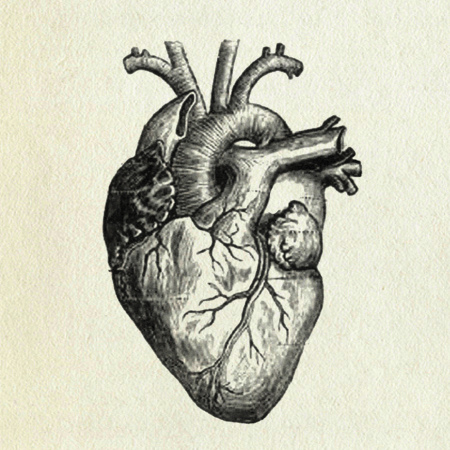
Diagram of human heart

I’ve read bits and pieces here and there that Endometriosis can grow on your heart (or the lining of your heart).  And have heard from a friend that she may have it on her heart.  That’s scary business!

Which got my juices flowin’ to find the documented cases of Endometriosis on the heart, how it was excised (if at all), etc.  Here goes ( PS – there’s not a lot out there…)!

Endometriosis is usually found within the pelvic cavity, but has also been known to travel northward and latching onto the liver and diaphragm.  It has also been found on the membranes surrounding the lungs.  Even rarer, it has been found on the brain, in the lymph nodes, and on the eyes.  But today, we focus on the heart…which is also SO INCREDIBLY RARE. Please, I’ll preface it by saying this is so super duper rare.

Continue reading