Endometriosis & the Brain

Krang from Teenage Mutant Ninja Turtles
Krang, from TMNT, seemed appropriate for this one…

Another rare location I’ve heard can be invaded by Endometriosis is our brain. Yep.  Our gray matter.  But, again, curiosity led me to find documented cases, symptoms, and treatments. So I’ve scoured the interwebs for just such a thing, but it was difficult to find much of anything!  This is not meant to scare anyone, or to create an Army of Hypochondriacs.  It’s meant to let everyone know that, yes, it does happen.  And this is what to look for…and what can be done for it..

From what I can find (which was very, very little), it appears that symptoms may include headaches or seizures.  As of 2010, there have only been 3 documented cases of cerebral Endometriosis (at least in English-language literature).

Let’s get down to the nitty gritty science!

Continue reading

Endometriosis & Soy Products

Bowl of soy beans in the pod

Here we go again, inspired to write due to a dietary “restriction.”  I’ve read that as an Endo Sufferer, I should avoid (or drastically cut back from) soy and soy-based products.  I’ve read soy mimics and increases estrogen levels, which we’ve come to understand can affect our Endometriosis growth and symptoms.  So today, I want to do my own research.

Soy products are the “richest sources of isoflavones” that humans can eat.  What the heck is an isoflavone? It’s a “plant-based compound with estrogenic activity” English, Lisa, ENGLISH! It means it’s a plant-based compound that mimics estrogen.  So, soy has a very rich, or high levels, of a property, a compound, a thing…that acts like, or mimics, estrogen.  The isoflavones can attach themselves to estrogen receptors throughout the body, and either mimic or block certain estrogen effects in tissues.

Why is that bad? Well, it’s not, for everyone.  Estrogen may help prevent certain forms of cancer (breast, uterine, or prostrate), stimulate bone growth, or help women suffering with post-menopausal symptoms. But for those of us who suffer from what very-well may be an estrogen-driven disease, it can be very bad.

Continue reading

Reader’s Choice : Can Men Get Endometriosis?

Male symbol

Last night, my boyfriend and I were talking about Endo’s “weirdness” how it can pop up in strange and unheard of places, and he popped the question (no, not THE question…), “Are there any reports of men having Endometriosis?”  I remembered reading somewhere that there were a few rare cases of it, but hadn’t read them deeply enough to understand their situations, diagnoses, and prognoses.  So, we have our topic for today!!

In rare cases, cis-men develop Endometriosis.  Transmen also suffer from the disease. But we will focus on cis-men for this blog: it appears many have been treated with long-term or large doses of estrogen therapy, but some are healthy men who have no history of cancer or estrogen treatment.  Here’s what I could find:

Continue reading

Endometriosis on your skin

Diagram of human skin

It’s about time I research more about Endometriosis being found in places other than your pelvic region.  We’ve already covered lungs, spine, and eyes, and today we’re going to delve into cases of Endometriosis and skin.  Skin? Yes, skin.  I’ve read that it’s rare, just like the other areas outside of the pelvic cavity…but, it does occur.  Some theorize it is implanted via the lymphatic orpro vascular systems; others think the cells are transplanted via surgery.

There seem to be two common categories of Endometriosis and the skin : spontaneous Endometriosis and scar Endometriosis.  Spontaneous Endo simply appears in random places on healthy skin (cutaneous or subcutaneous).  Scar Endo is found within scar tissue from prior surgeries or injuries.  It appears that surgical excision/removal of the Endometriosis lesions from the skin is the most common and effective way of handling the lesions.  Some surgeries may leave defects, which may (or may not) be repaired or rebuilt with a surgical mesh.  Some studies suggest that hormonal treatment may be too harsh for the patient for solitary lesions.

Continue reading

New Study : Endometriosis and Semen

New unwrapped condom

So there’s an article that was recently published that has a lot of the EndoCommunity in an uproar today on Facebook.  The article was title, “How your sex life may influence endometriosis,” published on May 1, 2015, by MedicalXpress. My initial knee-jerk reaction last night was to be furious.

I interpreted the article as saying that sex can cause and affect Endometriosis growth; to be more precise: seminal fluid can affect Endo growth.  Semen.  Baby-MoJo.  I’ve had my Endo pain since my early years in high school.  And I did not have sex until I was 21.  And my cramps were pretty damn bad back then.  How dare a study suggest that sexual activity had anything to do to heighten my endo symptoms or progression.   And my outrage was further fueled by others’ reactions about the same conclusion.

I’ve decided to take my time, read the study slowly, and try to digest what it is the study is trying to tell us. Wait. Step back. Breathe, breathe.  Relax.  Now go read the study…

Continue reading

Endometriosis & the Eyes

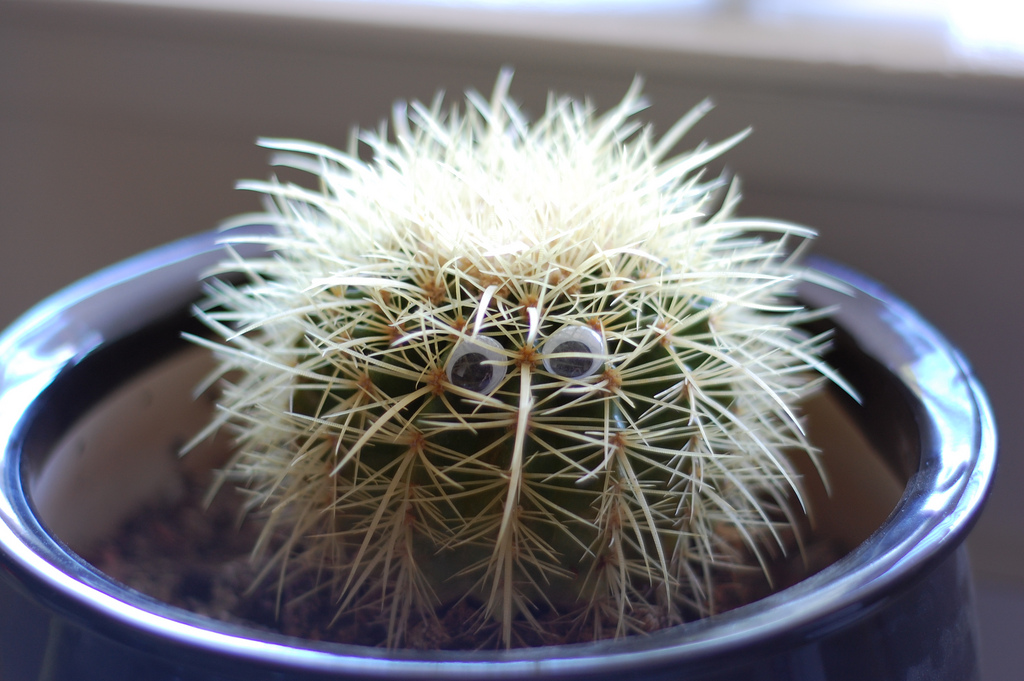
Potted barrel cactus with googly eyes

During my recent research regarding Endometriosis growing on the lungs and spine, I’ve also bumped into references to incredibly rare cases where it’s been found on the eyes, or the structures near the eyes.  THE EYES!  Ugh.  Makes my skin crawl.  So I figured I’d delve a bit into that today.

Most of all of the books and webpages I’ve read that talk about Endometriosis say it can grow on the eyes, but I’m having an extremely difficult time finding case studies or reports online about it.

In 2008 a case report was published of a 13-year-old girl would bleed from her tear duct during her menstrual cycle.  After imaging studies and other tests, it was suspected that she had Endometriosis inside her nasolacrimal canal (it houses the tear ducts); however, due to the location of the tissue, biopsies (and a confirmed diagnosis) were “impossible.”  For treatment, she was put on birth control.  If that didn’t control her symptoms, she would undergo hormone therapy.  I cannot find any follow-up studies on this poor girl (see photograph below).

Continue reading

Why no dairy?

Pitcher and glass of milk

I’ve read a lot of books and webpages that say women with Endometriosis should avoid dairy.  I’ve taken that step as best I can.  I miss my cheese.  I miss bagels with cream cheese.  I miss sour cream.  But, I do feel better!  Very little bloating, cramping, or gas (but that may be a combination of the changes in my diet…).

But now I’m curious as to why “no dairy” and why I feel better for not having it…

Continue reading

Endometriosis & the Spine

human spinal column

Endometriosis and THE WHAT?  You mean to tell me that this disease can be found on your…spine?  A disease typically diagnosed by gynecologists can grow there?  Okay, now this is like some bad sci-fi horror film…But alas…it’s true.  A girlfriend dropped the bomb last week that she has it on her spinal cord.  So now it’s time to pick my jaw up off of the ground and hit the books.  What the hell, Endo.  Really? Is nothing sacred?

Spinal Endometriosis:

Endometriosis on or in the spinal cord, vertebrae, or nerves is considered extremely rare.  However, it has been found to be wreaking havoc for many women.  It can cause symptoms of back pain, weakness, incontinence, sciatica pain, radiating leg pain, groin pain, and monoparesis (weakness to the point of near-paralysis), just to name a few.  These symptoms may always be present, may only be present during your menstrual cycle, or may worsen during your menstrual cycle. On top of those symptoms, the Endometriosis also does it’s usual thing: inflammation, scarring, creates pain, etc.

Continue reading