Endometriosis & The Lungs

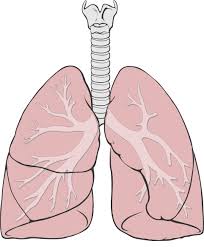
Graphic of human lungs

I’ve read bits and pieces here and there that Endometriosis can grow on or inside of your lungs.  An EndoSister had posted in one of the many Facebook support groups that I follow that she has Endo on her lungs, which causes her to cough up a lot of blood.  Others replied that they have it as well, but it leaves them in the hospital with collapsed lungs every month.  Which got my juices flowin’ to find the documented cases of Endometriosis on the lungs, how it was excised (if at all), etc.  Here goes!  This is NOT meant to scare you.  Just educate us all, including myself.

Endometriosis is usually found within the pelvic cavity, but has also been known to be found northward and latching onto the liver and diaphragm.  It has also been found on the membranes surrounding the lungs and heart.  Even rarer, it has been found on the brain, in the lymph nodes, and on the eyes.

Thoracic or Pulmonary Endometriosis is when Endometriosis implants/adhesions are found in your thoracic region, and can be found on your trachea, bronchi, diaphragm, lungs, or heart.  It was first medically documented in 1953.  Today, we focus on the lungs.

Continue reading

No red meat?

A cow and hamburger with a "no slash" through them

So, I’ve read time and time again that people with Endometriosis should avoid red meat.  I’ve altered my diet to avoid it as much as possible.  And have even written about it in small quantities in previous blogs.

But today I want to delve deeper into why: why no read meat? What does it do?  And I want proof; not just theories!  Let the research begin!

Some studies suggest that frequent consumption of red meat and ham increases the risk of developing Endometriosis. An Italian study published in 2003 found that there may be a link between diet and Endometriosis.  It also found that women who ate red meat seven or more times per week increased their risk of Endometriosis by 80-100%.  Women who ate ham three or more times per week were 80% more likely to have Endometriosis than women who ate less.  In comparison, women who ate vegetables and fish were 40% less likely of having Endometriosis.  This study was actually the combined data of two separate studies conducted on 504 women, and it reviewed their eating habits, lifestyles, and separated the women into two groups: who did or did not have Endometriosis.

Continue reading

Endo & Liver Function

Diagram of human digestive system

Most of my blogs are started out of my own curiosity, and this one is no different.

I’ve read in numerous sources that people with Endometriosis need to keep our livers in tip-top condition; well-greased and in proper working order.  I’ve seen a few Facebook posts from other EndoWarriors that they have heightened levels of *something* when they have a liver panel blood test done, and they wonder if their Endometriosis may have something to do with that.  That struck a chord with me because I have Gilbert’s Syndrome, which is a liver disease diagnosed through heightened liver panel results.

Does my Endo affect my liver’s functions? And does that, in turn, add to or affect my Gilbert’s Syndrome? My liver blood panel test results?

Continue reading

Artichokes : MmmMmm Good!

trimmed artichokes ready to cook

Tonight I’m cooking one of my favorite meals : roasted artichokes!  I’d never cooked one before last year.  Had NO clue how to do it, and boy was I intimidated.  But with eating healthier for my Endo, I started shopping at my local farmer’s market (living in California, they’re readily available year-round), and hit the wonders of the internet : I have since learned! And it’s EASY, delicious, and oh-so-good for you!

Which got me curious : why are they so good for you? I figure they’ll be roasting in the oven for the next hour, so : Internet, here I come!

Continue reading

Endo & Ovarian Cysts

Illustration of an ovary and fallopian tube

Many women with Endometriosis suffer from recurrent cysts on their ovaries.  But why? And what exactly is a cyst?

What is a cyst?

A cyst is an abnormal sac inside your body, completely enclosed, and it may contain liquid, gas, pus, fluids, semi-solid, or solid materials.  Imagine a blister, full of puss, tight and ready to be popped.  Now imagine that inside your body : a cyst is kind of like that.  However, if a cyst is full of puss, it is known as an abscess.  Cysts are typically non-cancerous, although some may lead to cancerous growths or tumors.  They are usually caused by an infection or clogging of the glands, although they may be caused by genetics, chronic inflammatory conditions, injury, cellular defects, or even parasites.

Continue reading

Ditch the Caffeine (if you can…)

Coffee beans, green tea, chocolate powder

Before I altered my diet to be more Endo-friendly, I was drinking 3-5 cups of coffee per day.  Toss in a Coke, Barq’s Root Beer, or Dr. Pepper for lunch.  And maybe another during dinner.  After my diagnosis, I read that caffeine is bad for my Endo…but why?  I kicked it right away. Cold turkey (only had withdrawal headaches for one week…).  Haven’t looked back since.

Caffeine is found naturally in coffee beans, tea leaves, and the cacao bean.  Coffee.  Tea.  Chocolate.  All of the deliciousness!

Caffeine May Increases Chances of Endometriosis

Scientists do not know why caffeine effects the possibility of developing Endometriosis; however, studies have shown that it does.  Many believe that caffeine intake increases estrogen levels, which may increase the chance of developing Endometriosis, or worsening our symptoms.

Continue reading

Bad Gas!

mushroom cloud after explosion

As much as I’d like to giggle, I’m not talking the *funny* kind of gas.  I’m referring to the Carbon Dioxide gas trapped in your body after a laparoscopic surgery. Approximately 35-80% of patients who undergo a laparoscopic surgery complain of shoulder pain.  It is reportedly supposed to last for up to 72 hours, but some patients have the ongoing pain for longer (mine lasted a few days longer).

During a laparoscopic surgery, Carbon Dioxide is injected into our abdomens to create a distended abdomen, a big balloon, so the surgeons can look around inside without all of our crammed organs in the way.  Some of that gas remains in our systems after surgery, causing pain. There are a few theories as to what causes the post-op pain in our shoulders:

Continue reading

Stress levels may affect Endo

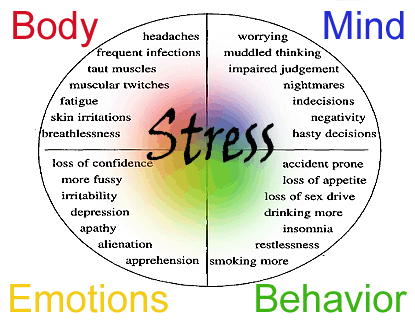
Graph of how stress affects body mind emotions and behavior

So after a particularly stressful day at the office, I decided to do some writing and soul searching and (of course) research.  In all of the books and articles I’ve read, there has been a comment or chapter stating that stress may worsen Endometriosis.  But why?

How Stress Affects the Body:

Stress may trigger adrenal stress hormones, which may alter heart rates and blood flow.  It may also impair our white blood cell count, which can lower the body’s chances of fighting infection, reduce inflammation or even prevent/limit scarring. Gals with Endo know that inflammation and scarring are two critical components of a painful Endo day.  Stress may also cause or exacerbate problems such as headaches, high blood pressure, heart problems, stroke, diabetes, skin conditions, asthma, arthritis, depression, and anxiety.

Continue reading