Ditch the Caffeine (if you can…)

Coffee beans, green tea, chocolate powder

Before I altered my diet to be more Endo-friendly, I was drinking 3-5 cups of coffee per day.  Toss in a Coke, Barq’s Root Beer, or Dr. Pepper for lunch.  And maybe another during dinner.  After my diagnosis, I read that caffeine is bad for my Endo…but why?  I kicked it right away. Cold turkey (only had withdrawal headaches for one week…).  Haven’t looked back since.

Caffeine is found naturally in coffee beans, tea leaves, and the cacao bean.  Coffee.  Tea.  Chocolate.  All of the deliciousness!

Caffeine May Increases Chances of Endometriosis

Scientists do not know why caffeine effects the possibility of developing Endometriosis; however, studies have shown that it does.  Many believe that caffeine intake increases estrogen levels, which may increase the chance of developing Endometriosis, or worsening our symptoms.

Continue reading

Bad Gas!

mushroom cloud after explosion

As much as I’d like to giggle, I’m not talking the *funny* kind of gas.  I’m referring to the Carbon Dioxide gas trapped in your body after a laparoscopic surgery. Approximately 35-80% of patients who undergo a laparoscopic surgery complain of shoulder pain.  It is reportedly supposed to last for up to 72 hours, but some patients have the ongoing pain for longer (mine lasted a few days longer).

During a laparoscopic surgery, Carbon Dioxide is injected into our abdomens to create a distended abdomen, a big balloon, so the surgeons can look around inside without all of our crammed organs in the way.  Some of that gas remains in our systems after surgery, causing pain. There are a few theories as to what causes the post-op pain in our shoulders:

Continue reading

Stress levels may affect Endo

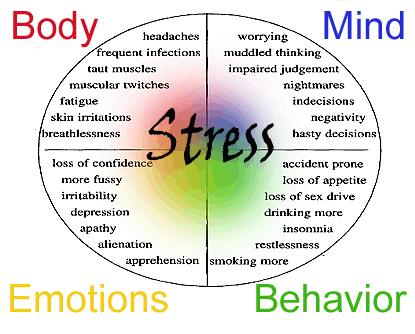
Graph of how stress affects body mind emotions and behavior

So after a particularly stressful day at the office, I decided to do some writing and soul searching and (of course) research.  In all of the books and articles I’ve read, there has been a comment or chapter stating that stress may worsen Endometriosis.  But why?

How Stress Affects the Body:

Stress may trigger adrenal stress hormones, which may alter heart rates and blood flow.  It may also impair our white blood cell count, which can lower the body’s chances of fighting infection, reduce inflammation or even prevent/limit scarring. Gals with Endo know that inflammation and scarring are two critical components of a painful Endo day.  Stress may also cause or exacerbate problems such as headaches, high blood pressure, heart problems, stroke, diabetes, skin conditions, asthma, arthritis, depression, and anxiety.

Continue reading

Reader’s Choice : Stats & Percentages

search

In all of the many books and webpages I’ve read since my Endometriosis diagnosis, I’ve read the same stats over and over.  1 in 10 people born with a uterus will develop Endometriosis.  176 million affected worldwide.  But where did those stats come from? When were they last updated? How do they track it?

After scouring the web, I finally found some of the sources of those figures, but nothing that actually gives me a current number of diagnoses around the world today:

But the term “women” is no longer an accurate reflection regarding the statistics. There are non-binary, transgender, others who do not identify as women, and even cis-men who suffer with Endometriosis.

Continue reading

EndoInvasion : Stages

A stage with the Bloomin' Uterus logo centered on it in a spotlight
Our Uterus : center stage!

So there are four “Stages” of Endometriosis.  It’s the doctors way of categorizing the depth of the EndoInvasion in our bodies.  It was developed by the American Society of Reproductive Medicine.   Diagrams of the various stages can be in an article published in Fertility & Sterility back in 1997.

I didn’t know my Stage level and had to ask my doctor.  My Endometriosis was Stage 4, the most severe it can get. Probably because it was brewing inside me undetected for nearly 2 decades. Ugly disease. (Update: As of June 6, 2019, I’ve now had a total of four excision surgeries; each one classified my illness as Stage 4).

The interesting things about Stages: the Stage Level doesn’t necessarily dictate our symptom or pain levels.  Someone with Stage 1 can have severe pain, while someone with Stage 4 may not even realize it.  Just one more mystery o’Endo.

So what are these Stages?  Here ya go:

Continue reading