
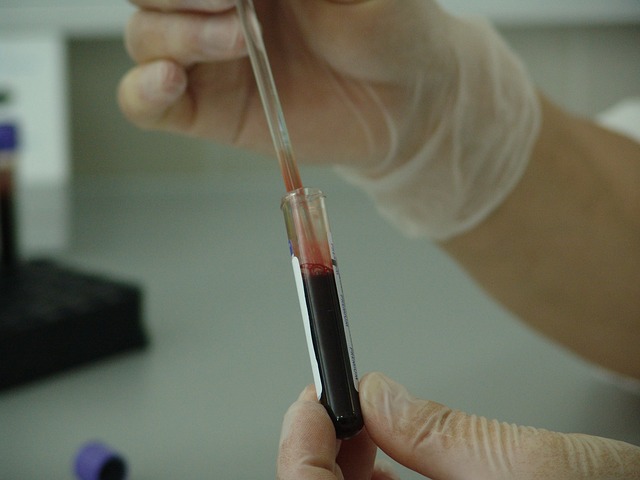
So it’s Sunday, which is Reader’s Choice day, and a friend of mine asked if doctor’s can tell a person has Endometriosis by abnormal blood test results. I know the answer is “no,” but wanted to delve into the different ways Endometriosis may be diagnosed, and the future efforts of modern medicine to help diagnose Endometriosis.
Continue readingResearch Studies

She’s got her mother’s eyes…and Endo…
So, how many of you folks with Endometriosis know that there’s a theory out there that it’s a hereditary disease? That it’s in our genes…? That we may inherit more than our mother’s good looks and our father’s charm?
After my June 2014 diagnosis, I went on the hunt for answers.
Continue readingReader’s Choice : Stats & Percentages

In all of the many books and webpages I’ve read since my Endometriosis diagnosis, I’ve read the same stats over and over. 1 in 10 people born with a uterus will develop Endometriosis. 176 million affected worldwide. But where did those stats come from? When were they last updated? How do they track it?
After scouring the web, I finally found some of the sources of those figures, but nothing that actually gives me a current number of diagnoses around the world today:
But the term “women” is no longer an accurate reflection regarding the statistics. There are non-binary, transgender, others who do not identify as women, and even cis-men who suffer with Endometriosis.
Continue readingEndoInvasion : Stages
So there are four “Stages” of Endometriosis. It’s the doctors way of categorizing the depth of the EndoInvasion in our bodies. It was developed by the American Society of Reproductive Medicine. Diagrams of the various stages can be in an article published in Fertility & Sterility back in 1997.
I didn’t know my Stage level and had to ask my doctor. My Endometriosis was Stage 4, the most severe it can get. Probably because it was brewing inside me undetected for nearly 2 decades. Ugly disease. (Update: As of June 6, 2019, I’ve now had a total of four excision surgeries; each one classified my illness as Stage 4).
The interesting things about Stages: the Stage Level doesn’t necessarily dictate our symptom or pain levels. Someone with Stage 1 can have severe pain, while someone with Stage 4 may not even realize it. Just one more mystery o’Endo.
So what are these Stages? Here ya go:
Continue readingResearch Outsmarts Endometriosis
For those of you with Endometriosis, The Feinstein Institute was commissioned by the Endometriosis Foundation of America to conduct a study of 200 women each year. It’s time to do something! We (the women!) provide either a blood sample or a saliva sample, as well as answer a few questions, and (optional) provide a sample of our menstrual blood. Some women are even able to provide samples that were biopsied in past surgeries, and can ask for the future surgery biopsied tissues to be handed over as well. Members of your family who do not have Endo may also participate. Again, trying to study all aspects of this disease…including those NOT affected.
The Feinstein Institute will process all of this data and research to help understand Endometriosis on a cellular and genetic level! One day there will be better treatments. Better answers. And a CURE! Steps like these will only lead to the right direction.
Continue reading


