Share Your Story : Marixsa

EndoWarrior logo

Marixsa is a fellow blogger and Endo advocate.  She was diagnosed when she was 28 years old.  Now 33, her story is a heartbreaking, yet encouraging, one.  Almost two decades of suffering without a diagnosis, being told she was exaggerating, living in fear of intimacy, missed diagnoses (not misdiagnosis…but literally doctors not seeing her Endometriosis while in surgery), followed by a myriad of additional surgeries, emotional rollercoasters, fertility treatments, and miscarriage.  Although scarred, Marixsa is truly a strong and beautiful Warrior, rich in faith and determination.  She continues to fight, for herself and for other EndoSisters.    And I hold her among my heroes.

Marixsa’s Journey: Like so many women, endometriosis affected me years before I was diagnosed. It’s been quite a journey, which is why this section is so long. Here’s where this road has taken me:

Continue reading

Share your Story : Nadia

Nadia is the team leader for Team Zimbabwe.  They’re putting together the first ever EndoMarch in their country and are hoping it will be a great success.  They are also hosting a February 27, 2016, awareness campaign with guest speakers to try to not only raise awareness of our illness, but hold in-depth conversations about possible causes and future treatments.  Nadia and I have been talking for the past several days and she’s allowing me to share her story with you today.

Continue reading

Bladder & Endometriosis

Diagram of the urinary system in humans

You’ve likely heard that Endometriosis can grow in all sorts of places inside the body.  Well, the bladder and urinary tract are no exception.  Endometriosis implants can grow on or inside the walls of the bladder or along the urethra.

Symptoms

Common symptoms patients may complain about with bladder Endo are frequently needing to pee, pain when the bladder is full, painful urination, and an urgent need to pee.  Some also suffer from blood in their urine when they’re on their cycles (may be hard to distinguish…given the natural course of what a period does…).  This urine-blood may not be perceptible to the naked eye and require a lab test.  And as usual, many EndoWarriors only have these symptoms during their periods; others have them 24/7. It should also be noted that many with bladder Endo don’t present any symptoms.

Continue reading

Is there a link between Endometriosis and Endometrial Hyperplasia?

Bloomin' Uterus logo surrounded by question marks

One of my readers recently contacted me asking if I could do some research for her.  Her physicians suspect she may have hyperplasia.  What is that, you may ask?  It’s the changing or enlarging of cells or organs which may develop into cancer.  Specifically, she is undergoing tests to see if she has endometrial hyperplasia.  Now what’s that?  It’s when the uterine lining (the endometrium) is too thick.  Her question?  Is there a link between Endo and hyperplasia?

I found this to be very interesting as I had an MRI before my diagnostic surgery which found I had abnormally thick uterine lining.  The first part of my surgery last year was to go in and perform a D&C (dilation & curettage) to remove some of the thick lining.  So now I’m not only researching for my reader, but for myself (although my D&C biopsy came back normal).

Continue reading

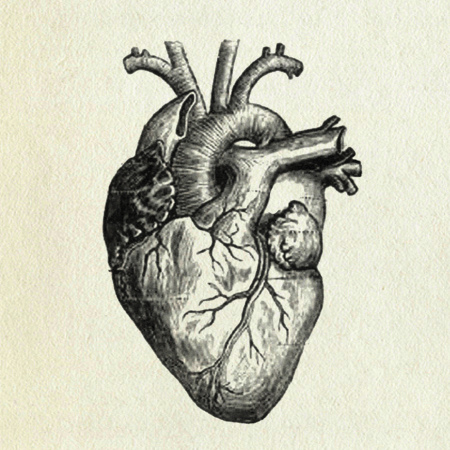
Endometriosis & The Heart

Diagram of human heart

I’ve read bits and pieces here and there that Endometriosis can grow on your heart (or the lining of your heart).  And have heard from a friend that she may have it on her heart.  That’s scary business!

Which got my juices flowin’ to find the documented cases of Endometriosis on the heart, how it was excised (if at all), etc.  Here goes ( PS – there’s not a lot out there…)!

Endometriosis is usually found within the pelvic cavity, but has also been known to travel northward and latching onto the liver and diaphragm.  It has also been found on the membranes surrounding the lungs.  Even rarer, it has been found on the brain, in the lymph nodes, and on the eyes.  But today, we focus on the heart…which is also SO INCREDIBLY RARE. Please, I’ll preface it by saying this is so super duper rare.

Continue reading

Share Your Story : Michelle

Text that reads don't be fobbed off

Michelle had suffered with the pain associated with Endo long before she was diagnosed with Endometriosis when she was 21.  Now 52, she lives in Bury, Lancashire in the UK. Her story is one of the more dramatic ones I’ve read so far:

Michelle’s Journey:  I had excruciating period pain from being 16. My doctor at the time told my mum I was hypochondriac and could not take pain. We all believed him.

Continue reading

Reader’s Choice : Can Men Get Endometriosis?

Male symbol

Last night, my boyfriend and I were talking about Endo’s “weirdness” how it can pop up in strange and unheard of places, and he popped the question (no, not THE question…), “Are there any reports of men having Endometriosis?”  I remembered reading somewhere that there were a few rare cases of it, but hadn’t read them deeply enough to understand their situations, diagnoses, and prognoses.  So, we have our topic for today!!

In rare cases, cis-men develop Endometriosis.  Transmen also suffer from the disease. But we will focus on cis-men for this blog: it appears many have been treated with long-term or large doses of estrogen therapy, but some are healthy men who have no history of cancer or estrogen treatment.  Here’s what I could find:

Continue reading

Endometriosis on your skin

Diagram of human skin

It’s about time I research more about Endometriosis being found in places other than your pelvic region.  We’ve already covered lungs, spine, and eyes, and today we’re going to delve into cases of Endometriosis and skin.  Skin? Yes, skin.  I’ve read that it’s rare, just like the other areas outside of the pelvic cavity…but, it does occur.  Some theorize it is implanted via the lymphatic orpro vascular systems; others think the cells are transplanted via surgery.

There seem to be two common categories of Endometriosis and the skin : spontaneous Endometriosis and scar Endometriosis.  Spontaneous Endo simply appears in random places on healthy skin (cutaneous or subcutaneous).  Scar Endo is found within scar tissue from prior surgeries or injuries.  It appears that surgical excision/removal of the Endometriosis lesions from the skin is the most common and effective way of handling the lesions.  Some surgeries may leave defects, which may (or may not) be repaired or rebuilt with a surgical mesh.  Some studies suggest that hormonal treatment may be too harsh for the patient for solitary lesions.

Continue reading

Endometriosis & the Eyes

Potted barrel cactus with googly eyes

During my recent research regarding Endometriosis growing on the lungs and spine, I’ve also bumped into references to incredibly rare cases where it’s been found on the eyes, or the structures near the eyes.  THE EYES!  Ugh.  Makes my skin crawl.  So I figured I’d delve a bit into that today.

Most of all of the books and webpages I’ve read that talk about Endometriosis say it can grow on the eyes, but I’m having an extremely difficult time finding case studies or reports online about it.

In 2008 a case report was published of a 13-year-old girl would bleed from her tear duct during her menstrual cycle.  After imaging studies and other tests, it was suspected that she had Endometriosis inside her nasolacrimal canal (it houses the tear ducts); however, due to the location of the tissue, biopsies (and a confirmed diagnosis) were “impossible.”  For treatment, she was put on birth control.  If that didn’t control her symptoms, she would undergo hormone therapy.  I cannot find any follow-up studies on this poor girl (see photograph below).

Continue reading