Cervical Endometriosis

Sprinkle-covered donut
…not really a cervix, but you get it… 😉

So, WordPress shows me a lot of the searches that people run that lead them to my site.  One has recently come up again and again.  “Cervical Endometriosis” and “Endometriosis on Cervix.”

Seeing as I’ve never touched up on that particular location, I figured I would today!

What are the symptoms? How are you diagnosed?  What’s the treatment?

Continue reading

Adenomyosis

The word Adenomyosis covered in little spots and lesions

April is Adenomyosis Awareness Month.  Ado-what-o?  A disease, similar to Endo; some say Ado is the cousin to Endometriosis.  And many people with Endo also suffer with Adenomyosis.  So, I figured I’d spread a bit of awareness of Ado during this month and learn something in the process.

A few folks who attended our Endo walk suffer also from Adeno.  And one who showed up to our last Endo support group meeting suffers from Ado (but not Endo).  It’s a term I’m beginning to hear a lot more about.  But, what is it?

Continue reading

Endometriosis & The Bowel

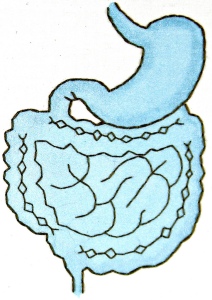
Diagram of human bowels

As you may know, Endometriosis is not limited to just your reproductive bits & pieces.  It can implant, grow, and fester in many places; the bowel included.  But what does that mean? How do you know if it’s on your bowel?  Today’s blog will go into that…Read on, dear Reader…read on.  Word of warning : I will be using words like fart and poop! Why dance around the subject with flowery words when I feel like I’m a giggly 12-year-old girl?

It is estimated that between 5-15% (and some even doctors guess it’s actually between 3-34%) of women with Endometriosis suffer from Endo on their bowels.  Bowel Endometriosis may affect the colon, the rectum, the large intestine, the small intestine, the colon, or the sigmoid colon.  The implants may be physically located on the bowels, or even just located adjacent to them in areas like the Pouch of Douglas, uterosacral ligaments, or rectovaginal septum. The close proximity of the inflamed and irritated lesions may be enough to induce bowel Endometriosis symptoms.  And these symptoms may also be caused by adhesions pulling or twisting the bowels.

Continue reading

Bladder & Endometriosis

Diagram of the urinary system in humans

You’ve likely heard that Endometriosis can grow in all sorts of places inside the body.  Well, the bladder and urinary tract are no exception.  Endometriosis implants can grow on or inside the walls of the bladder or along the urethra.

Symptoms

Common symptoms patients may complain about with bladder Endo are frequently needing to pee, pain when the bladder is full, painful urination, and an urgent need to pee.  Some also suffer from blood in their urine when they’re on their cycles (may be hard to distinguish…given the natural course of what a period does…).  This urine-blood may not be perceptible to the naked eye and require a lab test.  And as usual, many EndoWarriors only have these symptoms during their periods; others have them 24/7. It should also be noted that many with bladder Endo don’t present any symptoms.

Continue reading

Endometriosis : An Economic Machine

meme with Fry from Futurama holding up money. Text reads Shut up and take my money!

There are (at best guess) 176 million people born with a uterus worldwide who suffer from Endometriosis.  And it’s estimated that 5 million in the United States have Endometriosis.  1 in 10 supposedly have, or will have, this disease.  One. In. Ten.

An incurable, recurring disease which causes pain and infertility, among many other symptoms.  A revolving door disease which the “Golden Standard” of treatment is either constant prescription medications, or surgery, or both.  And, once removed, it will more than likely grow back and cause the same pain and symptoms, sometimes much worse than before.  And the only tried and true way to diagnosis the disease with with surgery!

So one thing hit me today.  This disease is a driving economic force!  What costs are associated with Endometriosis? As I live in the USA, my curiosity was toward the United States prices.  If you live elsewhere and are curious, I encourage you to figure this out.  For all of you living in the States, let’s find out together!

Continue reading

Have you heard of scanxiety?

Scanxiety…?  It’s a term frequently used in the cancer community.  An overwhelming sense of anxiety before a scheduled scan to check if your cancer has come back.  Am I comparing cancer to Endometriosis? No.  I’m simply stealing their well-coined term.

For any of us Endometriosis sufferers who have had any type of relief either from surgery or medicine, there’s always an underlying fear that it will recur at any time.  The doctors tell us there is no cure.  They tell us it will grow back.  There are a few doctors and patients out there who swear that if you remove all of the Endometriosis during an excision surgery, it will not return. But even the best Endo surgeons out there have documented cases of their patients having recurrence of Endo growth.

Perhaps some get lucky and it doesn’t return.  But for many of us, it does.

Continue reading

Reader’s Choice : Can Men Get Endometriosis?

Male symbol

Last night, my boyfriend and I were talking about Endo’s “weirdness” how it can pop up in strange and unheard of places, and he popped the question (no, not THE question…), “Are there any reports of men having Endometriosis?”  I remembered reading somewhere that there were a few rare cases of it, but hadn’t read them deeply enough to understand their situations, diagnoses, and prognoses.  So, we have our topic for today!!

In rare cases, cis-men develop Endometriosis.  Transmen also suffer from the disease. But we will focus on cis-men for this blog: it appears many have been treated with long-term or large doses of estrogen therapy, but some are healthy men who have no history of cancer or estrogen treatment.  Here’s what I could find:

Continue reading

Endometriosis on your skin

Diagram of human skin

It’s about time I research more about Endometriosis being found in places other than your pelvic region.  We’ve already covered lungs, spine, and eyes, and today we’re going to delve into cases of Endometriosis and skin.  Skin? Yes, skin.  I’ve read that it’s rare, just like the other areas outside of the pelvic cavity…but, it does occur.  Some theorize it is implanted via the lymphatic orpro vascular systems; others think the cells are transplanted via surgery.

There seem to be two common categories of Endometriosis and the skin : spontaneous Endometriosis and scar Endometriosis.  Spontaneous Endo simply appears in random places on healthy skin (cutaneous or subcutaneous).  Scar Endo is found within scar tissue from prior surgeries or injuries.  It appears that surgical excision/removal of the Endometriosis lesions from the skin is the most common and effective way of handling the lesions.  Some surgeries may leave defects, which may (or may not) be repaired or rebuilt with a surgical mesh.  Some studies suggest that hormonal treatment may be too harsh for the patient for solitary lesions.

Continue reading