Transvaginal Ultrasounds & Endometriosis

Diagram of a transvaginal ultrasound

You may have heard that you can’t see Endometriosis on an imaging study.  Well, this is true…BUT, it’s not to say that imaging studies are useless in helping to suspect/diagnose Endometriosis.  They can spot things that may indicate Endometriosis is present…One such tool is a transvaginal ultrasound (aka TVU, TVS, or TVUS).

Have you ever heard of, or had, a transvaginal ultrasound? Let me tell you : it’s not the ultrasounds you see in the movies.  No cold cream squished onto my belly with a technician rubbing a scanner along my abdomen. Nope…imagine if you will : squishy cold cream rubbed onto the tip of a rather large probe…and said probe is shoved up your hoohaw (yes, that’s a technical term).  It allows a better look at your organs around your feminine bits.  It’s not the most comfortable procedure in the world…and can downright hurt at times. But…

Continue reading
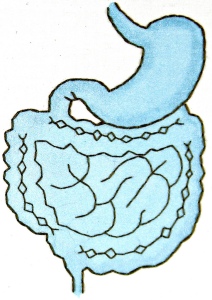
Endometriosis & The Bowel

Diagram of human bowels

As you may know, Endometriosis is not limited to just your reproductive bits & pieces.  It can implant, grow, and fester in many places; the bowel included.  But what does that mean? How do you know if it’s on your bowel?  Today’s blog will go into that…Read on, dear Reader…read on.  Word of warning : I will be using words like fart and poop! Why dance around the subject with flowery words when I feel like I’m a giggly 12-year-old girl?

It is estimated that between 5-15% (and some even doctors guess it’s actually between 3-34%) of women with Endometriosis suffer from Endo on their bowels.  Bowel Endometriosis may affect the colon, the rectum, the large intestine, the small intestine, the colon, or the sigmoid colon.  The implants may be physically located on the bowels, or even just located adjacent to them in areas like the Pouch of Douglas, uterosacral ligaments, or rectovaginal septum. The close proximity of the inflamed and irritated lesions may be enough to induce bowel Endometriosis symptoms.  And these symptoms may also be caused by adhesions pulling or twisting the bowels.

Continue reading

Share your Story : Sarah

Sarah’s symptoms began when she was 13 years old…but her diagnosis not until she was 34! Why not? How is that possible?  It happens more than it should…curious? Read on, Dear Reader, read on.

Sarah’s Journey:  I don’t think I’ve had a single day where my female reproductive organs were active and NOT pissing me off. I got my period one day in summer when I was thirteen years old. And it just … didn’t stop. For the first year of my menstruating life, I bled for 25 days out of thirty. It was ridiculous, and led to me having anemia and needing fluids almost all the time. My well meaning GP at the time said my body was just “adjusting”.

Continue reading

Share Your Story : Marixsa

EndoWarrior logo

Marixsa is a fellow blogger and Endo advocate.  She was diagnosed when she was 28 years old.  Now 33, her story is a heartbreaking, yet encouraging, one.  Almost two decades of suffering without a diagnosis, being told she was exaggerating, living in fear of intimacy, missed diagnoses (not misdiagnosis…but literally doctors not seeing her Endometriosis while in surgery), followed by a myriad of additional surgeries, emotional rollercoasters, fertility treatments, and miscarriage.  Although scarred, Marixsa is truly a strong and beautiful Warrior, rich in faith and determination.  She continues to fight, for herself and for other EndoSisters.    And I hold her among my heroes.

Marixsa’s Journey: Like so many women, endometriosis affected me years before I was diagnosed. It’s been quite a journey, which is why this section is so long. Here’s where this road has taken me:

Continue reading

Silent Endometriosis

Woman holding her index finger to her lips to shhh someone

There are many usual signs and symptoms of Endometriosis.  If you suffer from this disease, you know them all too well. One of our readers, Tanya, let us know that she suffers from “Silent Endometriosis.”  What’s that?  She has an official Endometriosis diagnosis, but only some of the symptoms associated with Endometriosis.  Some people with Silent Endo don’t have any Endo symptoms (this is known as asymptomatic Endometriosis). Does that make her any less of an Endo sufferer? No, not at all.  She suffers from the same invasive disease as the rest of us.  Just in a different way.

A whole slew of questions were raised, which we’ll look into:

  1. Why do some people present with classic symptoms like crippling pain and some don’t?
  2. And, given that silent endometriosis exists, this makes me wonder if the overall incidents of endometriosis is higher than is usually quoted. How many have this disease and have no idea?
  3. Since the symptoms don’t present as normal in silent endometriosis, what are some of the other signs that people possibly facing this condition can look out for?
  4. Why do some patients who are riddled with endometriosis have no pain, and others with very little endometriosis have excruciating pain?
Continue reading

Share Your Story : Amy

A woman at a music concert

Amy was 29 years old when she learned she had Endometriosis.  Now 38 and living in New Jersey, she has turned her personal battle with Endometriosis into a campaign to help others.

Amy’s Journey: My first memory of my cramps was when I was just 14 years old. I was on vacation with my family in Florida at my Grandmother’s house. We were there for a fun family vacation. However, my cramps were so bad that my mother insisted that I do a shot of brandy to warm my insides up. I was only 14! That is how my period started and it has continued to affect my life on a constant basis.

Continue reading

Bladder & Endometriosis

Diagram of the urinary system in humans

You’ve likely heard that Endometriosis can grow in all sorts of places inside the body.  Well, the bladder and urinary tract are no exception.  Endometriosis implants can grow on or inside the walls of the bladder or along the urethra.

Symptoms

Common symptoms patients may complain about with bladder Endo are frequently needing to pee, pain when the bladder is full, painful urination, and an urgent need to pee.  Some also suffer from blood in their urine when they’re on their cycles (may be hard to distinguish…given the natural course of what a period does…).  This urine-blood may not be perceptible to the naked eye and require a lab test.  And as usual, many EndoWarriors only have these symptoms during their periods; others have them 24/7. It should also be noted that many with bladder Endo don’t present any symptoms.

Continue reading

Is there a link between Endometriosis and Endometrial Hyperplasia?

Bloomin' Uterus logo surrounded by question marks

One of my readers recently contacted me asking if I could do some research for her.  Her physicians suspect she may have hyperplasia.  What is that, you may ask?  It’s the changing or enlarging of cells or organs which may develop into cancer.  Specifically, she is undergoing tests to see if she has endometrial hyperplasia.  Now what’s that?  It’s when the uterine lining (the endometrium) is too thick.  Her question?  Is there a link between Endo and hyperplasia?

I found this to be very interesting as I had an MRI before my diagnostic surgery which found I had abnormally thick uterine lining.  The first part of my surgery last year was to go in and perform a D&C (dilation & curettage) to remove some of the thick lining.  So now I’m not only researching for my reader, but for myself (although my D&C biopsy came back normal).

Continue reading

Share Your Story : Michelle

Text that reads don't be fobbed off

Michelle had suffered with the pain associated with Endo long before she was diagnosed with Endometriosis when she was 21.  Now 52, she lives in Bury, Lancashire in the UK. Her story is one of the more dramatic ones I’ve read so far:

Michelle’s Journey:  I had excruciating period pain from being 16. My doctor at the time told my mum I was hypochondriac and could not take pain. We all believed him.

Continue reading