Endometriosis : An Economic Machine

meme with Fry from Futurama holding up money. Text reads Shut up and take my money!

There are (at best guess) 176 million people born with a uterus worldwide who suffer from Endometriosis.  And it’s estimated that 5 million in the United States have Endometriosis.  1 in 10 supposedly have, or will have, this disease.  One. In. Ten.

An incurable, recurring disease which causes pain and infertility, among many other symptoms.  A revolving door disease which the “Golden Standard” of treatment is either constant prescription medications, or surgery, or both.  And, once removed, it will more than likely grow back and cause the same pain and symptoms, sometimes much worse than before.  And the only tried and true way to diagnosis the disease with with surgery!

So one thing hit me today.  This disease is a driving economic force!  What costs are associated with Endometriosis? As I live in the USA, my curiosity was toward the United States prices.  If you live elsewhere and are curious, I encourage you to figure this out.  For all of you living in the States, let’s find out together!

Continue reading
Have you heard of scanxiety?

Scanxiety…?  It’s a term frequently used in the cancer community.  An overwhelming sense of anxiety before a scheduled scan to check if your cancer has come back.  Am I comparing cancer to Endometriosis? No.  I’m simply stealing their well-coined term.

For any of us Endometriosis sufferers who have had any type of relief either from surgery or medicine, there’s always an underlying fear that it will recur at any time.  The doctors tell us there is no cure.  They tell us it will grow back.  There are a few doctors and patients out there who swear that if you remove all of the Endometriosis during an excision surgery, it will not return. But even the best Endo surgeons out there have documented cases of their patients having recurrence of Endo growth.

Perhaps some get lucky and it doesn’t return.  But for many of us, it does.

Continue reading

Reader’s Choice : C-Sections & Endometriosis

A friend asked me to look up any connections between Endometriosis and Cesarean Sections.  So, here we go.  Lots of science in this one!  Some studies show that less than 1% of women who undergo a cesarean section end up developing incisional Endometriosis (Endometriosis in or along the c-section scar).  However, that tiny little 1% number has a staggering amount of studies involving a lot of women who suffer from this form of Endo.

Continue reading

Endometriosis & The Lungs

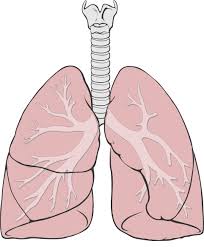
Graphic of human lungs

I’ve read bits and pieces here and there that Endometriosis can grow on or inside of your lungs.  An EndoSister had posted in one of the many Facebook support groups that I follow that she has Endo on her lungs, which causes her to cough up a lot of blood.  Others replied that they have it as well, but it leaves them in the hospital with collapsed lungs every month.  Which got my juices flowin’ to find the documented cases of Endometriosis on the lungs, how it was excised (if at all), etc.  Here goes!  This is NOT meant to scare you.  Just educate us all, including myself.

Endometriosis is usually found within the pelvic cavity, but has also been known to be found northward and latching onto the liver and diaphragm.  It has also been found on the membranes surrounding the lungs and heart.  Even rarer, it has been found on the brain, in the lymph nodes, and on the eyes.

Thoracic or Pulmonary Endometriosis is when Endometriosis implants/adhesions are found in your thoracic region, and can be found on your trachea, bronchi, diaphragm, lungs, or heart.  It was first medically documented in 1953.  Today, we focus on the lungs.

Continue reading

Share Your Story : Lauren

black and white photo of a glamourous woman in a gown and wearing diamond jewelry

Lauren was diagnosed in 2011.   She has had ongoing battles with fertility, miscarriages, and a battle for disability benefits.  Her story is a heartbreaking one.

Lauren’s Journey: I first started going to South Jersey Fertility in February 2010, to help conceive a pregnancy. On August 4, 2011, I started to develop excruciating pelvic and abdominal pain. The pain was so bad, I had to go to the emergency room.

On September 16, 2011, I had a laparoscopy, which found classic endometriosis lesions of the left pelvic sidewall and a single band-like adhesion involving the right ovary to the uterus. There was a large peritioneal window under the right ovary. This is consistent with endometriosis.

Continue reading

Share Your Story : Cyntelle

African American woman sitting in a car

Cyntelle was diagnosed with Endometriosis when she was 29 years old.  Now 32 and living in Savannah, GA, Cyntelle is the mother of a beautiful son. She loves dancing and music, and has recently begun a blog of her own.  Cyntelle’s Endo journey is quite a bumpy one…

Cyntelle’s Journey: After I had my son (October 2008), I was still vomiting and had terrible abdominal pain. My belly was swollen to the point that people were asking if I was pregnant again (impossible). December 2008 I went to the ER. The ER doc said I had a kidney infection and possibly an STD. I was a single, black, young mother so of course I had an STD? Right? Wrong. No STD was found and I was 25. Not as young as the high school age they thought I was. I digress. :)They performed lots of tests, I had an ultrasound, everything. The PA suggested I had a small cyst on my left ovary. ER doc stuck with kidney infection. What do I know? I’m no doctor.

Continue reading

Share Your Story : Andy

text that reads Live every day to its fullest

Andy was diagnosed with Endometriosis when she was 23.  Now 29, Andy hasn’t let her diagnosis slow her down:  She’s earned her Ph.D., is always active and continues to increase her physical activity.  She also loves to bake and spend time with her family and fur-babies on the coast of Australia.  Her positive attitude is an inspiration!

Andy’s Journey: I was diagnosed with endometriosis in 2008, during the first year of my PhD at the age of 23, after five years of severe pain and being bounced around from one doctor to another. Some doctors told me I was overacting and that it was “just period pain”, whilst one doctor told me it was PCOS. From the age of 18 I was taking Yasmin for the control of a few cysts a scan had found on my ovaries at that age. However Yasmin did nothing to control my pain and in fact after five years I developed more cysts and horrible headaches.

Continue reading

Share Your Story : Angela

A woman with brown hair wearing glasses

Angela was 29 when she found out she had Endometriosis.  Now 32, she continues to have pain and problems, despite several excision surgeries.  She lives in Darwen in the United Kingdom and she and her fiancé are the proud and happy parents of their fur-baby, Alfie. They continue to push on and live, despite these difficulties.

Angela’s Journey: I’ve always struggled with painful and heavy periods since the age of about 14. I was used to going months without one and then the floodgates would open and the Hell would start again. When I was 18 I was diagnosed with Polycystic Ovarian Syndrome. To be fair I was quite lucky with my symptoms. Yes I put on weight but thankfully I didn’t develop excess hair. It was manageable. I was prepared for potential fertility issues but I wasn’t overly concerned. And then it all went wrong. So so wrong.

Continue reading

Share Your Story : Courtney

A woman with brown hair wearing sunglasses

Courtney lives in Canada, and was diagnosed with Endometriosis a year ago, when she was 28 years old.  Now 29, Courtney makes beautiful jewelry and donates a portion of her sales to Canadian charities that deal with Endometriosis and other women’s health issues.

Courtney’s Journey:  I’m a pretty private person for the most part, and the thought of sharing my personal medical history on the internet was something that took a great deal of careful consideration on my part. But the more research I do, the more I find that the reluctance of women to share their stories is in part due to the fact that they have often spent years repeating their very personal medical details and symptoms to doctor after doctor, without getting the treatment they need. In many cases, these women are told that this is their “burden as a woman” or worse, not having their concerns taken seriously at all and told that – since the doctor can’t see anything wrong – it must be “in their head”. As personal as it is, I think it’s important for women who feel comfortable enough to do so, to share their story; if not online, at least to their family and friends, so that they may help raise awareness about this disease and help women get the care they deserve!

Continue reading