Bladder & Endometriosis

Diagram of the urinary system in humans

You’ve likely heard that Endometriosis can grow in all sorts of places inside the body.  Well, the bladder and urinary tract are no exception.  Endometriosis implants can grow on or inside the walls of the bladder or along the urethra.

Symptoms

Common symptoms patients may complain about with bladder Endo are frequently needing to pee, pain when the bladder is full, painful urination, and an urgent need to pee.  Some also suffer from blood in their urine when they’re on their cycles (may be hard to distinguish…given the natural course of what a period does…).  This urine-blood may not be perceptible to the naked eye and require a lab test.  And as usual, many EndoWarriors only have these symptoms during their periods; others have them 24/7. It should also be noted that many with bladder Endo don’t present any symptoms.

Continue reading

Feel Good Fridays

A dumpster overflowing with garbage

It’s Friiiiiiiiiiiiday!  And I’ve been having a stressful week, so this week’s quote is about…stress!  Brought to you by Danzae Pace:

“Stress is the trash of modern life-we all generate it but if you don’t dispose of it properly, it will pile up and overtake your life.”

So, it’s true : we all have stress in our lives.  Some a little, some a lot.  And we all have to deal with it, or it WILL win.  Breathe. Meditate.  Get away.  Color. Watch your favorite show.  Listen to music. Walk the dog.  Cry.  Something.  Let it all out and give it some release.  I need to take some of my advice this weekend 😉

Truth, Theory, or Tall Tale?

Diagram of a stem cell

Stem cells may play a role in the regenerative and recurrent properties of Endometriosis.

Theory

A new study was published on September 12, 2015, in the International Journal of Clinical and Experimental Medical Sciences which presents the theory that stem cells are involved in Endometriosis growth and recurrence.    It also brings up an interesting point that studies have shown tobacco smokers tend to have a low occurrence of Endometriosis, and they believe it may have something to do with tobacco inhibiting stem cell migration, thus inhibiting Endometriosis’ growth (assuming the stem cell theory explains it’s growth, migration, and recurrence).  While this publication cannot come to a conclusion as to their role, it does present some interesting questions which will need to be further researched.  If you’d like to read it, click here.

Resources:

Milena Králíčková, Vaclav Vetvicka. Endometriosis: Are Stem Cells Involved?. International Journal of Clinical and Experimental Medical Sciences. Vol. 1, No. 3, 2015, pp. 65-69. doi: 10.11648/j.ijcems.20150103.16

Feel Good Fridays

Black and white photograph of a cat with one ear that's been clipped

To all of you who do little things to cheer people up, thank you.  Help someone out today.  Buy a cup of coffee for the person in line behind you.  Tip 20%.  Give a hug, or even just flash a smile.  Take a penny, give a penny.  Feed a stray cat.  Wave to a passing car.  And to those EndoWarriors who send “Yellow Mail,” this quote’s for you:

“Sometimes, little things make a big difference…” ~Nino Varsimashvili

Thank you. Keep doing those little things.  You never know whose day you’re saving.

Truth, Theory, or Tall Tale

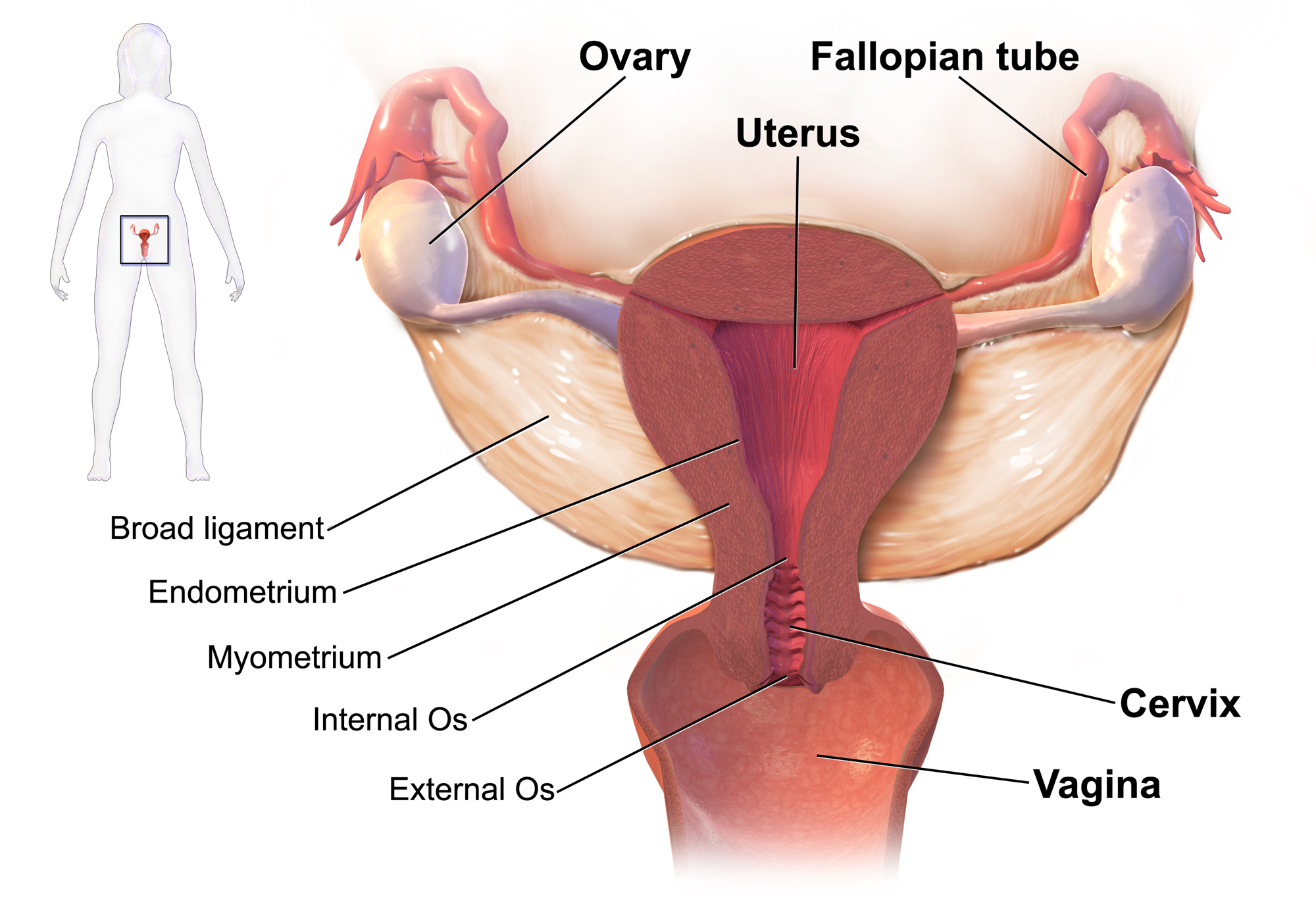
Diagram of female human reproductive organs

One day, a medication may be able to shrink or stop the growth of Endometriosis lesions without affecting ovarian function.

Theory

Many believe that Endometriosis is an estrogen-driven disease.  Current treatments include stopping estrogen production in the body by inducing chemical menopause or by prescribing continuous birth control to effectively limit estrogen production in the body.  These treatments can have devastating side effects, and some may only be taken for a limited period of time.

On January 21, 2015, a story was published in the Biology of Reproduction which discussed the discovery of compounds that block the inflammatory properties of estrogen receptors, without affecting the functions of the ovaries.  The University of Illinois also published a story.

Tests were performed on mice and found that these compounds blocked new and additional Endometriosis growth, without affecting the mice’s fertility.  Tests were also performed on cells from human Endometriosis lesions with the same stopping and shrinking results.  These compounds were also shown to work well with Letrozole, a drug which inhibits estrogen production in the hopes of reducing Endometriosis pain and symptoms.  Further testing with primates is needed before additional conclusions can be drawn.

However, it does appear that in the future medications may likely be created that will reduce, slow, and possibly stop Endometriosis growth without the horrible side effects of some of the other standard medications, including chemical menopause, bone loss, and infertility.

You can read the actual study abstract published in Science Translation Medicine.

Feel Good Friday

Two yellow ribbons interlocked around the words Suicide Endometriosis

Today’s quote is not really a feel good quote.  Another EndoWarrior committed suicide this week.  So today is a somber quote.  A sad fact of life.  A call to action.  Please, if you know someone who is going through something that may lead them down this path or choice, please be there for them, uplift them, seek help…

Tiffanie DeBartolo wrote the following dialogue in How to Kill a Rockstar:

“Did you really want to die?”
“No one commits suicide because they want to die.”
“Then why do they do it?”
“Because they want to stop the pain.”

Not one more life.  If you are fighting dark thoughts, there are people you can talk to. I’m always here.

Not one more…please.

Is there a link between Endometriosis and Endometrial Hyperplasia?

Bloomin' Uterus logo surrounded by question marks

One of my readers recently contacted me asking if I could do some research for her.  Her physicians suspect she may have hyperplasia.  What is that, you may ask?  It’s the changing or enlarging of cells or organs which may develop into cancer.  Specifically, she is undergoing tests to see if she has endometrial hyperplasia.  Now what’s that?  It’s when the uterine lining (the endometrium) is too thick.  Her question?  Is there a link between Endo and hyperplasia?

I found this to be very interesting as I had an MRI before my diagnostic surgery which found I had abnormally thick uterine lining.  The first part of my surgery last year was to go in and perform a D&C (dilation & curettage) to remove some of the thick lining.  So now I’m not only researching for my reader, but for myself (although my D&C biopsy came back normal).

Continue reading

More about my Pooper

an inflatable toilet filled with tootsie rolls

So I posted about my poo diary this morning, but you don’t know WHY I have to keep one…

So Saturday I had an appointment with my PCP. Well, the Physician’s Assistant. It was wonderful! I was going in to get a referral to a GI doctor because of my poopy-gut-pain (knives, daggers, glass feelings when I poo) and we talked for nearly an hour about my Endometriosis, my diet, my supplements, my birth control, and my poopy issues. She wasn’t quick to jump to conclusions of IBS or Crohn’s, which I valued! And we even discussed the possibility that my Endo and/or adhesions may have returned, which may be causing my renewed poopy-pain (been poopy-pain free for nearly a year, then *blamo* they’re back). At the end of our lengthy conversation, she stuck her finger in my butt (wooooohooooo), said that I have a sharp 90 degree angle inside (which she said isn’t normal, but may not be bad) and it may truly be that adhesions are pulling my insides out of whack. Especially after I told her my op report said Endo and adhesions “obliterated my cul de sac”- she understood right away that pulls everything and can cause havoc with rectum and bowels.

Continue reading

Truth, Theory, or Tall Tale?

Bloomin' Uterus logo surrounded by question marks

The medical community has a standard of care for Endometriosis.

TallTale

There are many physicians who have heard, and treat, Endometriosis.  And there are many still who have not heard of it, nor know the first thing about treating Endometriosis.  With that being said, is there a medical-community standard for successfully suppressing symptoms of Endometriosis?  In this modern day and age of scientific discovery, you’d think yes…but…

No.

Some physicians will operate, surgically removing or destroying Endometriosis implants and scarring from the pelvic cavity and beyond.  Some physicians refuse to operate.

Some prescribe Lupron Depot with the “Add Back” pill.  Some refuse to prescribe the Add Back pill.  And some refuse to prescribe Lupron.  Some prescribe Depo Provera, others prescribe Zoladex, others Danazol, others Lanzopral.

Some suggest hysterectomies.  Others are vehemently against them.

Some suggest birth control pills, IUDs, implants, or a “ring.”  Others do not.

Many prescribe NSAIDs and pain killers.  Many do not.

And while any of these above-referenced treatments may work for some women, they do not work for all women…

The medical community still does not know what causes, contributes to, or sustains Endometriosis.  Without that knowledge, they cannot begin to iron out a standard of care for all women, let alone a cure.  It’s trial and error.  Hit and miss.

And it’s frustrating.