Dead at 27

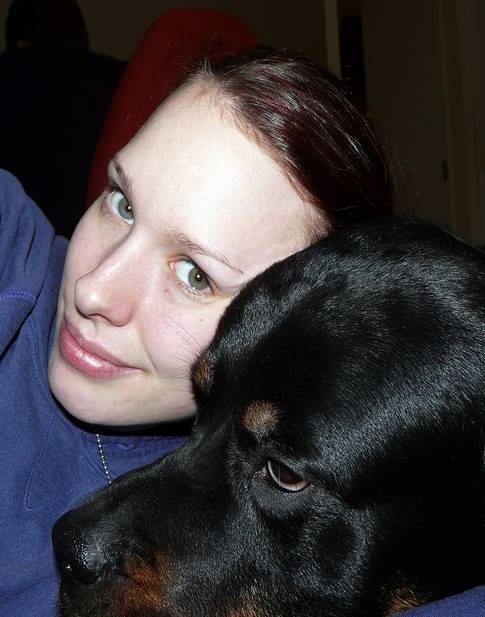
A young woman and her dog

A Swedish friend of mind sent me an article about a Swedish gal, Emelia, who died in 2011 due to complications of Endometriosis, and (more importantly) the neglect of her physicians.  Google translate gave me the gist of it.

Emelia was diagnosed with Endometriosis when she was 21 years old, among the usual places it was also found on her intestines.  In 2010 (she was approx. 26) she had been suffering from severe constipation (sometimes for periods of up to 10 days) which we well know is a symptom of Endometriosis.  Over the next nine months, Emelia saw 32 different doctors. That’s right…thirty-two.  Nobody could resolve her constipation, symptoms, or her pain. She sought referrals to an Endometriosis Clinic at the Uppsala University Hospital in the hopes they could help.  But her referral requests were denied.

Continue reading

Reader’s Choice : Stats & Percentages

search

In all of the many books and webpages I’ve read since my Endometriosis diagnosis, I’ve read the same stats over and over.  1 in 10 people born with a uterus will develop Endometriosis.  176 million affected worldwide.  But where did those stats come from? When were they last updated? How do they track it?

After scouring the web, I finally found some of the sources of those figures, but nothing that actually gives me a current number of diagnoses around the world today:

But the term “women” is no longer an accurate reflection regarding the statistics. There are non-binary, transgender, others who do not identify as women, and even cis-men who suffer with Endometriosis.

Continue reading

Readers Choice : Hysterectomies & Endo

watermelon getting balls scooped out of it with a melon baller

Hystery (haha) of Hysterectomies

The first recorded vaginal hysterectomy was in the 2nd Century AD, performed by Soranus of Epheus for a prolapsed uterus.  During the 18th Century, there was a 90% mortality rate for women who underwent hysterectomies.   And in 1843, Dr. Clay performed the first successful subtotal hysterectomy in Manchester, England, although the poor women died several days after her surgery. In 1847, chloroform was introduced as an anesthesia during surgeries, but due to it’s toxicity, surgeries had to be performed within one hour.  In 1853, Dr. Burnham of Massachusetts, performed the first successful abdominal subtotal hysterectomy with a surviving patient.  Interestingly enough, it was somewhat accidental: while excising an ovarian cyst, his patient vomited (there was no anesthesia) and the force of her vomiting pushed the uterus out of the abdominal incision. Unable to return the uterus to the cavity, Dr. Burnham was forced to remove it.  During his next 15 hysterectomies, he only lost 3 patients.  In 1878, German doctor, Freund, introduced the first reproducible “simple” hysterectomy; and in 1898, Austrian doctor, Schauta and his student Wertheim, performed the first successful radical hysterectomy for uterine cancer. In 1929, Dr. Richardson of the United States performed the first total abdominal hysterectomy.  France introduced the gynecological laparoscopic surgery in the1940s; however, the first laparoscopic hysterectomy was not performed until 1988 by Dr. Reich.  The DaVinci robotic laparascopic system was approved by the FDA in 2000 and the first robotic laparoscopic hysterectomy was performed in 2005.

Continue reading

Readers Choice : The Spoon Theory

A spoon in the dirt
A photo I took years ago finally has a purpose.

Christine Miserandino came up with The Spoon Theory.  It is gut-wrenching. The Spoon Theory was Christine’s way of explaining to her friend what life with Lupus is like. It’s a metaphor for our stamina and energy: any task you do during the day uses up one spoon.  You only have 12 spoons…so you must choose your tasks wisely, or else you run out of spoons…and steam.  For those of us with Endometriosis, the Spoon Theory still applies.  Any chronic illness, especially one that causes pain and fatigue, can use the spoon theory.  Continue reading

Reader’s Choice : Endo made my life better

Quote: Endo is such a stupid disease, but your image symbol for endo gives it so much more meaning to me. I am a woman, I have an invisible illness, I still have value, and I am still beautiful! Anonymous

“Endo made my life better!” Now there’s words you don’t hear everyday…

I was 35 years old when I received the word after a routine cystectomy that I have Endometriosis.  Learning I had this disease, then coming to realize how many women have it, and how little is known about it; that there is no cure…I had to learn more!  I had to do something!   Granted, the peace of mind that all of the pain I’ve endured over the years wasn’t normal was a fantastic thing. But still…!

So I searched for San Diego area support groups.  Found none.  Then searched for San Diego, or even Southern California, walks for March 2015.  And found none.  So I became frustrated at the lack of concern for our illness.  Nobody seemed to care out here.  Nobody seemed to even know about it, other than my surgeon and his staff…So I started the gofundme campaign with the determination to walk in March 2015 without an organized event.  And to raise funds for an organization that DOES care and DOES do something for our Endo.

And on my bad days, I had to create art.  When I created the Bloomin’ Uterus graphic, it was just to make me feel good on a bad day; just to reassure myself that I am still as beautiful as I ever was.  But it exploded into a symbol for women all over suffering with Endometriosis.

Continue reading