Reader’s Choice : Hysterectomies & Myomectomies Spreading Cancer?

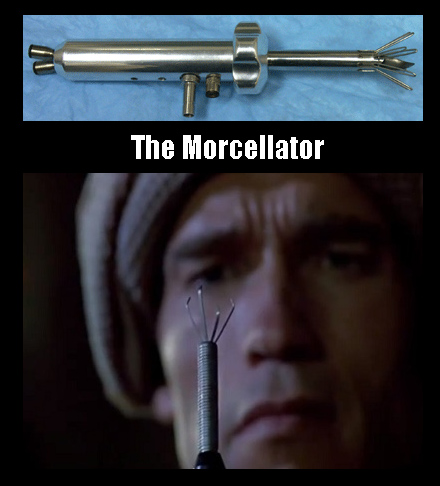
A morcellator

I have heard that sometimes when physicians conduct a hysterectomy where the uterus was shredded/broken down and removed through small incisions then biopsied, cancerous cells could be detected during the biopsy.  And that the presence of those cancerous cells may remain in the abdominal cavity post-procedure, which may spread and continue to develop.  Some women who this happened to ended up having to go through a intense radiation therapy treatment to remove the cancerous cells.

Continue reading

Age Doesn’t Matter!

five-generations4

So I was curious.  I’ve been reading that the usual age women are diagnosed with Endometriosis is in their 20s and 30s, sometimes after years of misdiagnoses and tests.  But, what’s the age of the youngest and oldest person ever recorded to have been diagnosed with Endometriosis?  Aaaaand….Google!

Youngest:

There are conflicting sources for the youngest age:  I’ve seen 8, 10 (diagnosed just after her second period), 11, and 13 years old.  Even though the vast internet has conflicting ages, I’m very shocked at how young these girls were.  I didn’t even start my period until I was about 13 or 14 years old (I should find that date in my old diaries…). I cannot imagine being that young and suffering with this disease.  And imagine the psychological and social effects it must have on those poor girls at that age.

Continue reading

Share Your Story : Nikkia

Nikkia

Nikkia was diagnosed when she was 23 years old.  Now 31, she lives in Arizona and she and her husband are trying to conceive their second child.  Please keep them in your prayers as they are facing the difficult decision of a hysterectomy due to the complications of her illness.

Nikkia’s Journey: Endometriosis has a long history in my family. My grandmother passed away at a young age of endometrium cancer (the lining of the uterus). My mother has had two surgeries to removed fibroids to the point it didn’t help so they did a partial hysterectomy. For me I started noticing sharp pelvic pain when I was 22 . My husband and I was trying to conceive but was unsuccessful.

Continue reading

Share Your Story : Angela

A woman with brown hair wearing glasses

Angela was 29 when she found out she had Endometriosis.  Now 32, she continues to have pain and problems, despite several excision surgeries.  She lives in Darwen in the United Kingdom and she and her fiancé are the proud and happy parents of their fur-baby, Alfie. They continue to push on and live, despite these difficulties.

Angela’s Journey: I’ve always struggled with painful and heavy periods since the age of about 14. I was used to going months without one and then the floodgates would open and the Hell would start again. When I was 18 I was diagnosed with Polycystic Ovarian Syndrome. To be fair I was quite lucky with my symptoms. Yes I put on weight but thankfully I didn’t develop excess hair. It was manageable. I was prepared for potential fertility issues but I wasn’t overly concerned. And then it all went wrong. So so wrong.

Continue reading

Share your Story : Amanda

A smiling woman with brown hair

Amanda was diagnosed with Endometriosis at 22 and had a hysterectomy at 28.  Now 36, she continues to suffer from chronic pain, despite the hysterectomy.  Regardless, she fights through it and she and her husband have adopted two lovely children. She is blessed, even with all she has endured.  May her story aid others in their journey.

Amanda’s Journey: My story started one summer afternoon when I was twelve. My family had gone on a day trip to a park. My period had started that day and the cramps started as usual. This day was going to be a turning point though as the pain reached a point to where I found myself curled up on the floor of our minivan drenched in a cold sweat, praying that I would not throw up as my family picnicked nearby.

At first, these episodes happened a few times a year. By the time I was seventeen, they became a monthly occurrence. I did not understand the significance of the degree of pain I was in. All of my friends complained about their periods so I figured I was just experiencing what everyone else did. My mom took me to my first gynecologist appointment that year, searching for relief. I was started on an anti-inflammatory and told that it was “normal” to have cramps like that at my age. Hopefully, they would improve with age.

Continue reading

Reader’s Choice : Enough is ENOUGH!

text that reads "Enough"

A personal choice for every person with Endometriosis : When have I suffered enough pain and when do I step up the treatment?

Some prefer natural methods of controlling their Endometriosis symptoms : supplements, vitamins, diet, and essential oils.  But these methods may not work for everyone. I’ve gone the route of prescription narcotics, surgery, hormonal treatments, eastern medicine, acupuncture, altered diet, etc. Others may have undergone hysterectomies.

When and how do you decide which is right for you?  Only you know the answer to that question.

Continue reading

Readers Choice : Hysterectomies & Endo

watermelon getting balls scooped out of it with a melon baller

Hystery (haha) of Hysterectomies

The first recorded vaginal hysterectomy was in the 2nd Century AD, performed by Soranus of Epheus for a prolapsed uterus.  During the 18th Century, there was a 90% mortality rate for women who underwent hysterectomies.   And in 1843, Dr. Clay performed the first successful subtotal hysterectomy in Manchester, England, although the poor women died several days after her surgery. In 1847, chloroform was introduced as an anesthesia during surgeries, but due to it’s toxicity, surgeries had to be performed within one hour.  In 1853, Dr. Burnham of Massachusetts, performed the first successful abdominal subtotal hysterectomy with a surviving patient.  Interestingly enough, it was somewhat accidental: while excising an ovarian cyst, his patient vomited (there was no anesthesia) and the force of her vomiting pushed the uterus out of the abdominal incision. Unable to return the uterus to the cavity, Dr. Burnham was forced to remove it.  During his next 15 hysterectomies, he only lost 3 patients.  In 1878, German doctor, Freund, introduced the first reproducible “simple” hysterectomy; and in 1898, Austrian doctor, Schauta and his student Wertheim, performed the first successful radical hysterectomy for uterine cancer. In 1929, Dr. Richardson of the United States performed the first total abdominal hysterectomy.  France introduced the gynecological laparoscopic surgery in the1940s; however, the first laparoscopic hysterectomy was not performed until 1988 by Dr. Reich.  The DaVinci robotic laparascopic system was approved by the FDA in 2000 and the first robotic laparoscopic hysterectomy was performed in 2005.

Continue reading