Share Your Story : Michelle

Text that reads don't be fobbed off

Michelle had suffered with the pain associated with Endo long before she was diagnosed with Endometriosis when she was 21.  Now 52, she lives in Bury, Lancashire in the UK. Her story is one of the more dramatic ones I’ve read so far:

Michelle’s Journey:  I had excruciating period pain from being 16. My doctor at the time told my mum I was hypochondriac and could not take pain. We all believed him.

Continue reading

Share Your Story : Supraneeti

Woman laying down on floor in fetal position

Supraneeti was diagnosed with Endometriosis about a year ago, and has shared her story with us today.  She lives in London and is finding creative ways of expressing herself, our disease, and it’s effect.  Her story, and music video, follow:

I am a fellow Endo-sufferer or shall we say survivor?! I am also a film director and an actress and after being in practical house arrest for more than 5 months, I decided to make a short film in style of a music video.  The most difficult part of my recovery has been the stigma attached to anything to do with lady parts.

Continue reading

Endometriosis : An Economic Machine

meme with Fry from Futurama holding up money. Text reads Shut up and take my money!

There are (at best guess) 176 million people born with a uterus worldwide who suffer from Endometriosis.  And it’s estimated that 5 million in the United States have Endometriosis.  1 in 10 supposedly have, or will have, this disease.  One. In. Ten.

An incurable, recurring disease which causes pain and infertility, among many other symptoms.  A revolving door disease which the “Golden Standard” of treatment is either constant prescription medications, or surgery, or both.  And, once removed, it will more than likely grow back and cause the same pain and symptoms, sometimes much worse than before.  And the only tried and true way to diagnosis the disease with with surgery!

So one thing hit me today.  This disease is a driving economic force!  What costs are associated with Endometriosis? As I live in the USA, my curiosity was toward the United States prices.  If you live elsewhere and are curious, I encourage you to figure this out.  For all of you living in the States, let’s find out together!

Continue reading

Shoulders for Sisters : Suicide Prevention

Shoulder for Sisters logo

Suicide and Endometriosis has been a topic heavy on my heart for the past seven months.  Am I suicidal? No.  However, last year there were several EndoWarriors who committed suicide.  And this year a few more have.  Too many.  But can easily understand their hopelessness: pain; no cure; the potential for multiple surgeries; regrowth; Western medicine, alternative medicine, natural supplements, snake oils, relief, recurrence, and the cycle starts all over again.  Not to mention a sense of being completely alone, misunderstood, misdiagnosed, mistreated by physicians, mislabeled as drug-seekers, fakers, and crazies.

I’ve been trying to think of ways that I can help. In a small way.  Or a big way.  And I’ve fallen short on ideas… But today I’ve learned of a group where Warriors with suicidal thoughts can go for help.  An old-fashioned phone-line group.  Yes, that’s right.  You can email, PM, or call someone if you need to talk.  Talk with someone who is in your shoes.  Who knows what you’re going through…because they’re going through it, too.  Understand that you are not alone, and understand that people want to listen. And help.

Continue reading

Reader’s Choice : C-Sections & Endometriosis

A friend asked me to look up any connections between Endometriosis and Cesarean Sections.  So, here we go.  Lots of science in this one!  Some studies show that less than 1% of women who undergo a cesarean section end up developing incisional Endometriosis (Endometriosis in or along the c-section scar).  However, that tiny little 1% number has a staggering amount of studies involving a lot of women who suffer from this form of Endo.

Continue reading

Endometriosis & Soy Products

Bowl of soy beans in the pod

Here we go again, inspired to write due to a dietary “restriction.”  I’ve read that as an Endo Sufferer, I should avoid (or drastically cut back from) soy and soy-based products.  I’ve read soy mimics and increases estrogen levels, which we’ve come to understand can affect our Endometriosis growth and symptoms.  So today, I want to do my own research.

Soy products are the “richest sources of isoflavones” that humans can eat.  What the heck is an isoflavone? It’s a “plant-based compound with estrogenic activity” English, Lisa, ENGLISH! It means it’s a plant-based compound that mimics estrogen.  So, soy has a very rich, or high levels, of a property, a compound, a thing…that acts like, or mimics, estrogen.  The isoflavones can attach themselves to estrogen receptors throughout the body, and either mimic or block certain estrogen effects in tissues.

Why is that bad? Well, it’s not, for everyone.  Estrogen may help prevent certain forms of cancer (breast, uterine, or prostrate), stimulate bone growth, or help women suffering with post-menopausal symptoms. But for those of us who suffer from what very-well may be an estrogen-driven disease, it can be very bad.

Continue reading

Reader’s Choice : Can Men Get Endometriosis?

Male symbol

Last night, my boyfriend and I were talking about Endo’s “weirdness” how it can pop up in strange and unheard of places, and he popped the question (no, not THE question…), “Are there any reports of men having Endometriosis?”  I remembered reading somewhere that there were a few rare cases of it, but hadn’t read them deeply enough to understand their situations, diagnoses, and prognoses.  So, we have our topic for today!!

In rare cases, cis-men develop Endometriosis.  Transmen also suffer from the disease. But we will focus on cis-men for this blog: it appears many have been treated with long-term or large doses of estrogen therapy, but some are healthy men who have no history of cancer or estrogen treatment.  Here’s what I could find:

Continue reading

Endometriosis on your skin

Diagram of human skin

It’s about time I research more about Endometriosis being found in places other than your pelvic region.  We’ve already covered lungs, spine, and eyes, and today we’re going to delve into cases of Endometriosis and skin.  Skin? Yes, skin.  I’ve read that it’s rare, just like the other areas outside of the pelvic cavity…but, it does occur.  Some theorize it is implanted via the lymphatic orpro vascular systems; others think the cells are transplanted via surgery.

There seem to be two common categories of Endometriosis and the skin : spontaneous Endometriosis and scar Endometriosis.  Spontaneous Endo simply appears in random places on healthy skin (cutaneous or subcutaneous).  Scar Endo is found within scar tissue from prior surgeries or injuries.  It appears that surgical excision/removal of the Endometriosis lesions from the skin is the most common and effective way of handling the lesions.  Some surgeries may leave defects, which may (or may not) be repaired or rebuilt with a surgical mesh.  Some studies suggest that hormonal treatment may be too harsh for the patient for solitary lesions.

Continue reading

Endometriosis & The Lungs

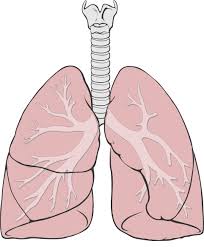
Graphic of human lungs

I’ve read bits and pieces here and there that Endometriosis can grow on or inside of your lungs.  An EndoSister had posted in one of the many Facebook support groups that I follow that she has Endo on her lungs, which causes her to cough up a lot of blood.  Others replied that they have it as well, but it leaves them in the hospital with collapsed lungs every month.  Which got my juices flowin’ to find the documented cases of Endometriosis on the lungs, how it was excised (if at all), etc.  Here goes!  This is NOT meant to scare you.  Just educate us all, including myself.

Endometriosis is usually found within the pelvic cavity, but has also been known to be found northward and latching onto the liver and diaphragm.  It has also been found on the membranes surrounding the lungs and heart.  Even rarer, it has been found on the brain, in the lymph nodes, and on the eyes.

Thoracic or Pulmonary Endometriosis is when Endometriosis implants/adhesions are found in your thoracic region, and can be found on your trachea, bronchi, diaphragm, lungs, or heart.  It was first medically documented in 1953.  Today, we focus on the lungs.

Continue reading