Truth, Theory, or Tall Tale?

Bloomin' Uterus logo surrounded by question marks

You’ll stop having Endometriosis symptoms, pain, adhesions, and surgeries once you hit menopause.

TallTale

There have been many documented cases of women still having Endometriosis symptoms and pain even after entering menopause.  There has even been a 78-year-old woman who had to undergo excision surgery! 78!  And this woman had a hysterectomy in her 50s.  Further providing evidence that a hysterectomy will not cure your Endometriosis (although it may take away some of those monthly uterus pains).

Women who have Endometriosis and are peri-menopausal, menopausal, or post-menopausal (whether naturally or surgically-induced) will need to talk to their doctors about any hormone replacement therapy (HRT).  Some believe that the supplemental introduction of estrogen may increase your chances of recurrent Endometriosis, especially if some Endo implants remain in your body.  Some women also continue to suffer from the digestive and bowel-related issues.  It is also important to note that your ovaries are not the only estrogen-manufacturers in your body.  Your liver, for instance, manufacturers estrogen.  I repeat: talk to your doctor.  Especially if you fear your Endometriosis has returned.

Keep heart, though.  Many women report a huge decline in their Endometriosis-related symptoms once they hit menopause.  However, as you know: Endometriosis is different for every woman. Only time will tell.

Resources:

Endometriosis Association

U.S. National Library of Medicine

WomensHealth.gov

Women’s Voices for Change

~ Again, I am a layman.  I do not hold any college degrees, nor mastery of knowledge.  Please take what I say with a grain of salt.  If curious, do your own research 😉 Validate my writings.  Or challenge them.  And ALWAYS feel free to consult with your physician. Always.  Yours ~ Lisa

Endo & Liver Function

Diagram of human digestive system

Most of my blogs are started out of my own curiosity, and this one is no different.

I’ve read in numerous sources that people with Endometriosis need to keep our livers in tip-top condition; well-greased and in proper working order.  I’ve seen a few Facebook posts from other EndoWarriors that they have heightened levels of *something* when they have a liver panel blood test done, and they wonder if their Endometriosis may have something to do with that.  That struck a chord with me because I have Gilbert’s Syndrome, which is a liver disease diagnosed through heightened liver panel results.

Does my Endo affect my liver’s functions? And does that, in turn, add to or affect my Gilbert’s Syndrome? My liver blood panel test results?

Continue reading

Ditch the Caffeine (if you can…)

Coffee beans, green tea, chocolate powder

Before I altered my diet to be more Endo-friendly, I was drinking 3-5 cups of coffee per day.  Toss in a Coke, Barq’s Root Beer, or Dr. Pepper for lunch.  And maybe another during dinner.  After my diagnosis, I read that caffeine is bad for my Endo…but why?  I kicked it right away. Cold turkey (only had withdrawal headaches for one week…).  Haven’t looked back since.

Caffeine is found naturally in coffee beans, tea leaves, and the cacao bean.  Coffee.  Tea.  Chocolate.  All of the deliciousness!

Caffeine May Increases Chances of Endometriosis

Scientists do not know why caffeine effects the possibility of developing Endometriosis; however, studies have shown that it does.  Many believe that caffeine intake increases estrogen levels, which may increase the chance of developing Endometriosis, or worsening our symptoms.

Continue reading

Readers Choice : Hysterectomies & Endo

watermelon getting balls scooped out of it with a melon baller

Hystery (haha) of Hysterectomies

The first recorded vaginal hysterectomy was in the 2nd Century AD, performed by Soranus of Epheus for a prolapsed uterus.  During the 18th Century, there was a 90% mortality rate for women who underwent hysterectomies.   And in 1843, Dr. Clay performed the first successful subtotal hysterectomy in Manchester, England, although the poor women died several days after her surgery. In 1847, chloroform was introduced as an anesthesia during surgeries, but due to it’s toxicity, surgeries had to be performed within one hour.  In 1853, Dr. Burnham of Massachusetts, performed the first successful abdominal subtotal hysterectomy with a surviving patient.  Interestingly enough, it was somewhat accidental: while excising an ovarian cyst, his patient vomited (there was no anesthesia) and the force of her vomiting pushed the uterus out of the abdominal incision. Unable to return the uterus to the cavity, Dr. Burnham was forced to remove it.  During his next 15 hysterectomies, he only lost 3 patients.  In 1878, German doctor, Freund, introduced the first reproducible “simple” hysterectomy; and in 1898, Austrian doctor, Schauta and his student Wertheim, performed the first successful radical hysterectomy for uterine cancer. In 1929, Dr. Richardson of the United States performed the first total abdominal hysterectomy.  France introduced the gynecological laparoscopic surgery in the1940s; however, the first laparoscopic hysterectomy was not performed until 1988 by Dr. Reich.  The DaVinci robotic laparascopic system was approved by the FDA in 2000 and the first robotic laparoscopic hysterectomy was performed in 2005.

Continue reading

Birth Control Pills & Endo

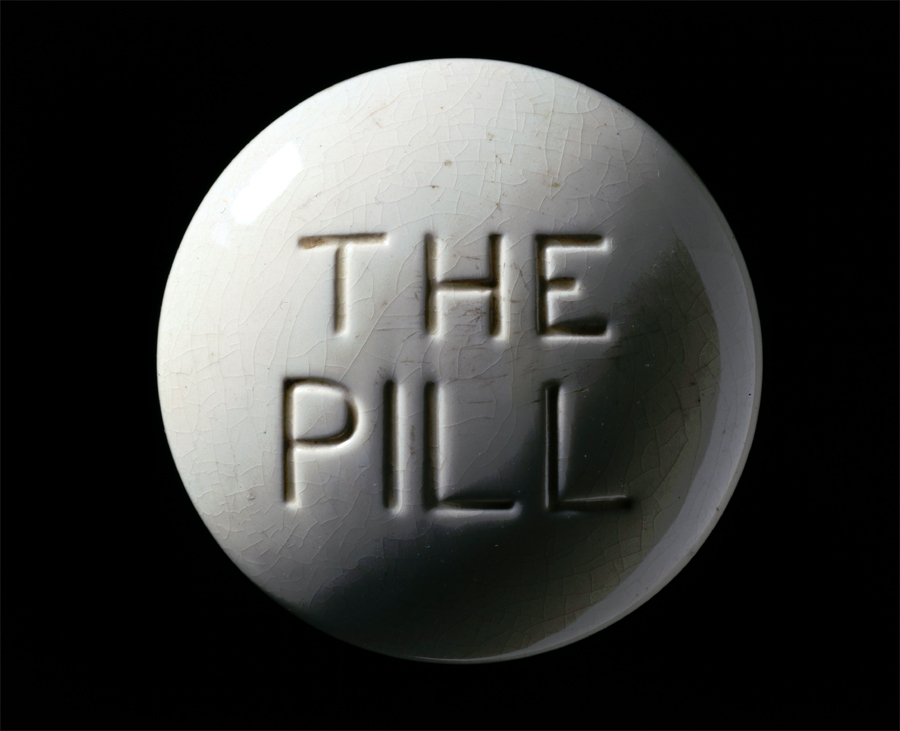
a round white pill that reads The Pill

I’ve been advised that once my Lupron Depot treatments are concluded in January, I will be starting a continuous birth control pill.  This is in the hopes to continue to suppress my monthly period, and theoretically my Endometriosis symptoms.  Endometriosis is “fed” by our Estrogen levels.  Doctors may not know what causes Endo, but they mostly agree that it feeds and reacts to our Estrogen levels, as well as the influence of xenoestrogens (environmental estrogens).

But How & Why is it expected to work?  I totally like to know the science behind things…

Continue reading