Endometriosis & The Heart

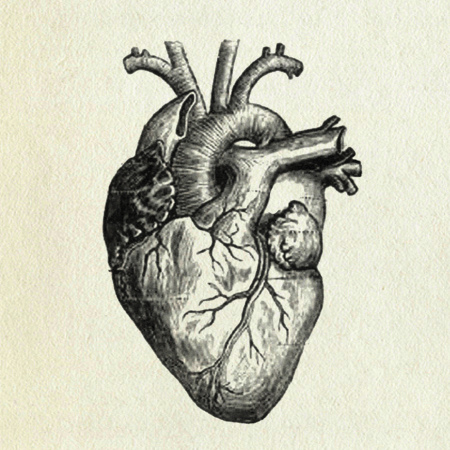
Diagram of human heart

I’ve read bits and pieces here and there that Endometriosis can grow on your heart (or the lining of your heart).  And have heard from a friend that she may have it on her heart.  That’s scary business!

Which got my juices flowin’ to find the documented cases of Endometriosis on the heart, how it was excised (if at all), etc.  Here goes ( PS – there’s not a lot out there…)!

Endometriosis is usually found within the pelvic cavity, but has also been known to travel northward and latching onto the liver and diaphragm.  It has also been found on the membranes surrounding the lungs.  Even rarer, it has been found on the brain, in the lymph nodes, and on the eyes.  But today, we focus on the heart…which is also SO INCREDIBLY RARE. Please, I’ll preface it by saying this is so super duper rare.

Continue reading


Endometriosis : An Economic Machine

meme with Fry from Futurama holding up money. Text reads Shut up and take my money!

There are (at best guess) 176 million people born with a uterus worldwide who suffer from Endometriosis.  And it’s estimated that 5 million in the United States have Endometriosis.  1 in 10 supposedly have, or will have, this disease.  One. In. Ten.

An incurable, recurring disease which causes pain and infertility, among many other symptoms.  A revolving door disease which the “Golden Standard” of treatment is either constant prescription medications, or surgery, or both.  And, once removed, it will more than likely grow back and cause the same pain and symptoms, sometimes much worse than before.  And the only tried and true way to diagnosis the disease with with surgery!

So one thing hit me today.  This disease is a driving economic force!  What costs are associated with Endometriosis? As I live in the USA, my curiosity was toward the United States prices.  If you live elsewhere and are curious, I encourage you to figure this out.  For all of you living in the States, let’s find out together!

Continue reading

Reader’s Choice : C-Sections & Endometriosis

A friend asked me to look up any connections between Endometriosis and Cesarean Sections.  So, here we go.  Lots of science in this one!  Some studies show that less than 1% of women who undergo a cesarean section end up developing incisional Endometriosis (Endometriosis in or along the c-section scar).  However, that tiny little 1% number has a staggering amount of studies involving a lot of women who suffer from this form of Endo.

Continue reading

Share Your Story : Andy

text that reads Live every day to its fullest

Andy was diagnosed with Endometriosis when she was 23.  Now 29, Andy hasn’t let her diagnosis slow her down:  She’s earned her Ph.D., is always active and continues to increase her physical activity.  She also loves to bake and spend time with her family and fur-babies on the coast of Australia.  Her positive attitude is an inspiration!

Andy’s Journey: I was diagnosed with endometriosis in 2008, during the first year of my PhD at the age of 23, after five years of severe pain and being bounced around from one doctor to another. Some doctors told me I was overacting and that it was “just period pain”, whilst one doctor told me it was PCOS. From the age of 18 I was taking Yasmin for the control of a few cysts a scan had found on my ovaries at that age. However Yasmin did nothing to control my pain and in fact after five years I developed more cysts and horrible headaches.

Continue reading

Share Your Story : Courtney

A woman with brown hair wearing sunglasses

Courtney lives in Canada, and was diagnosed with Endometriosis a year ago, when she was 28 years old.  Now 29, Courtney makes beautiful jewelry and donates a portion of her sales to Canadian charities that deal with Endometriosis and other women’s health issues.

Courtney’s Journey:  I’m a pretty private person for the most part, and the thought of sharing my personal medical history on the internet was something that took a great deal of careful consideration on my part. But the more research I do, the more I find that the reluctance of women to share their stories is in part due to the fact that they have often spent years repeating their very personal medical details and symptoms to doctor after doctor, without getting the treatment they need. In many cases, these women are told that this is their “burden as a woman” or worse, not having their concerns taken seriously at all and told that – since the doctor can’t see anything wrong – it must be “in their head”. As personal as it is, I think it’s important for women who feel comfortable enough to do so, to share their story; if not online, at least to their family and friends, so that they may help raise awareness about this disease and help women get the care they deserve!

Continue reading